When should you put on a winter veil? How to succeed without missteps? Why choose this accessory exactly? Here are the answers to all your questions!
Why Use a Winter Veil?
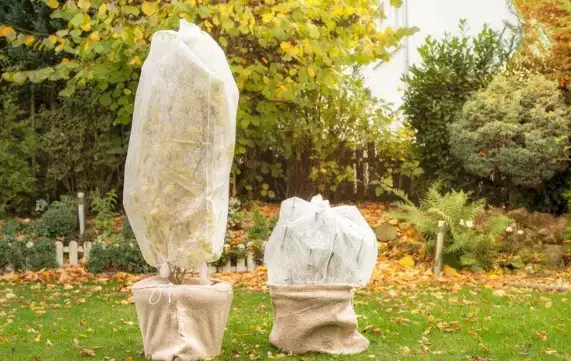
For those who don’t know, the overwintering veil is designed to protect less hardy plants from cold and frost. It is installed during the coldest periods and can be used for plants in the ground as well as those on balconies and terraces grown in pots or planters. The winter veil comes in various models to meet different gardeners’ needs. Experts recommend using a non-woven polypropylene veil with UV protection. This protective screen is light and allows plants to breathe without damaging young shoots.
Warning: Please note that this heat shield cannot protect frost-prone plants such as bougainvillea and pelargoniums. Fragile plants must be overwintered during their rest period, either in a veranda or a winter garden.
When to Put on a Winter Veil?
Faced with a cold snap, you might wonder when exactly to put on a winter veil. Frankly speaking, it is not an exact science and depends on two important factors: the type of veil and the hardiness of the plants. However, the installation of this protective screen should be done just before the arrival of the first frosts. Be sure to check the weather regularly so you can act quickly and protect your crops effectively.
No one is spared from sudden frosts that can occur at night. Don’t panic; there is no problem putting on your winter veil earlier. It will not suffocate your plants, allowing them to breathe normally, and it lets natural light through. If the sun comes out and temperatures are above 0°C, don’t hesitate to move the veil aside a little, but put it back on at night.
The end of November is probably the best time to install such winter protection if you have not already done so. Don’t wait for the temperature to drop below 0°C.
How to Properly Put on a Winter Veil?
To install a thermal screen in winter, nothing complicated! The first step is to prepare the plants by spreading a good layer of dead leaves at their base. Then cut the veil to the necessary dimensions and place it over the aerial part of the plant before securing it with strong twine. For plants grown in pots, these must also be well wrapped.
As for flowerbeds and the vegetable garden, place the veil directly on the plants; there is no need to tie it. Simply place weights along its ends to keep it on the ground. The main thing is not to leave holes that will allow the wind to pass through.
When to Remove the Winter Veil?
When should you remove the winter veil? The answer is super simple: when late frosts are no longer to be feared.