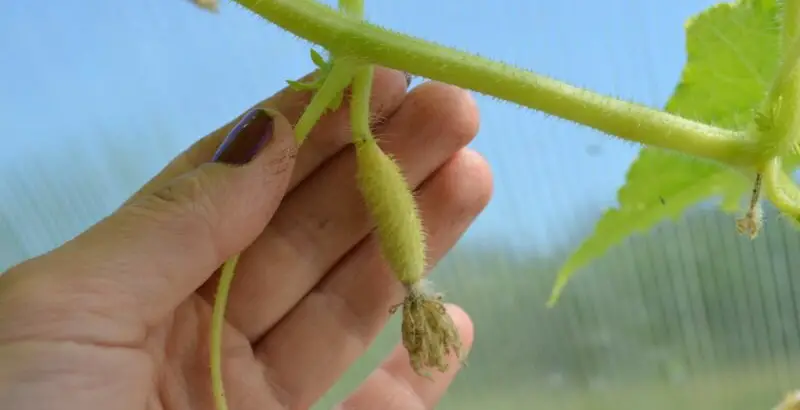
Cucumber growers often face the frustrating issue of yellowing ovaries that eventually drop off, especially in greenhouse settings. This problem stems from lapses in agricultural practices and care mistakes that can be avoided with proper attention.
Common Reasons for Yellowing and Dropping Cucumber Ovaries
- Insufficient Lighting:
Cucumbers require ample sunlight to thrive. Nearby plants in the greenhouse can overshadow cucumbers, depriving them of necessary light. To mitigate this, adhere to proper spacing: plant parthenocarpic hybrids at a rate of 1-2 bushes per square meter and bee-pollinated varieties at 2-3 bushes per square meter. Regularly prune shoots to maintain a manageable size and remove unnecessary tendrils, flower buds, and side shoots to optimize energy use. - Air and Soil Temperature Fluctuations:
Cucumbers are sensitive to temperature variations. Optimal temperatures should be maintained:
- Before fruiting: 22-24°C in clear weather, 20-22°C in cloudy weather, and 17-18°C at night.
- During fruiting: 23-26°C in clear weather, 21-23°C in cloudy weather, and 18-20°C at night.
Extremes above 25-27°C or below 13-15°C can cause cucumber ovaries to yellow, dry out, and drop. Use additional insulation like double films or coverings to regulate temperatures as needed.
- Lack of Essential Trace Elements:
Poor soil conditions or excessive fertilization can lead to nutrient deficiencies, particularly affecting hybrid cucumber varieties. Avoid manure and instead use a solution of 1 tablespoon urea and 3 tablespoons wood ash dissolved in 10 liters of water for foliar application or as a soil drench. Regularly supplement soil with 300 grams of wood ash per square meter to maintain nutrient balance. - Overproduction and Watering Issues:
High-yielding hybrids can overtax nutrient resources, causing premature fruit drop. Regularly remove excess ovaries to redirect plant energy efficiently. Proper watering is crucial: moderate before flowering and increase during fruiting while ensuring soil moisture balance. - Bacteriosis Infection:
Bacteriosis, exacerbated by high humidity and dense plantings, can manifest as yellowing ovaries and leaf spots. Treat with Bordeaux mixture or copper chloride suspension. In autumn, fumigate the greenhouse with sulfur checkers to prevent recurrence. - Lack of Bee Pollination:
Some cucumber varieties rely on bee pollination, which can be hindered in closed environments like greenhouses. Hand pollination by transferring pollen from male to female flowers can help. Improve pollination success by opening greenhouse doors and windows and spraying cucumber bushes with sweetened water to attract bees.
By addressing these factors diligently, gardeners can prevent yellowing and dropping of cucumber ovaries, ensuring healthier plants and more abundant harvests. Following these practices promotes optimal growth conditions and reduces the likelihood of crop loss due to physiological or environmental stressors.
Show Comments