Whitewashing fruit trees in spring is a crucial practice to safeguard them against environmental stresses, pests, and diseases. Here’s a comprehensive guide to help you whitewash your fruit trees effectively.
Advantages of Spring Whitewashing
- Sunburn Protection:
- Purpose: Protects the bark from overheating and cracking due to the winter sun.
- How It Works: The white coating reflects sunlight, helping to keep the bark cooler.
- Pest Control:
- Purpose: Helps expose pests that hibernate in bark cracks to their natural predators.
- How It Works: The whitewash makes pests more visible to birds and other predators.
- Prevention of Fungal Diseases:
- Purpose: Reduces the risk of fungal infections.
- How It Works: Helps kill fungal spores that overwinter on the bark.
Variants of Solutions for Bleaching Trees
- Classic Recipe:
- Ingredients:
- 10 liters of water
- 3 kg of slaked lime or chalk
- 500 g of copper sulfate
- 100 g of casein glue
- Preparation: Mix all ingredients until well blended. This solution provides robust protection against sunburn, pests, and fungal diseases.
- With Clay and Manure:
- Ingredients:
- 10 liters of water
- 2 kg of slaked lime
- 1 kg of fat clay
- 1 shovelful of manure
- 250 g of copper sulfate
- Preparation: Combine all ingredients, ensuring a uniform mixture. The addition of clay and manure enhances the coating’s adhesion and provides additional nutrients.
- With Stationery Glue and Karbofos:
- Ingredients:
- 2 liters of water
- 300 g of lime
- 2 tablespoons of copper sulfate
- 200 g of stationery glue
- 200 g of clay
- 25 g of karbofos
- Preparation: Mix thoroughly. This solution offers a strong protective layer and helps manage specific pest issues.
Stages of Tree Bleaching
- Preparation:
- Clean the Bark: Remove dirt, moss, lichen, and debris from the tree trunks and branches using a brush or a pressure washer.
- Inspect for Damage: Check for any signs of damage or disease on the bark and address them before whitewashing.
- Timing:
- Optimal Period: Apply the whitewash in late February or early March, before buds start opening. This ensures protection during critical early growth stages.
- Weather Conditions: Choose a dry day with moderate temperatures for application. Avoid applying in very wet or extremely cold conditions.
- Application:
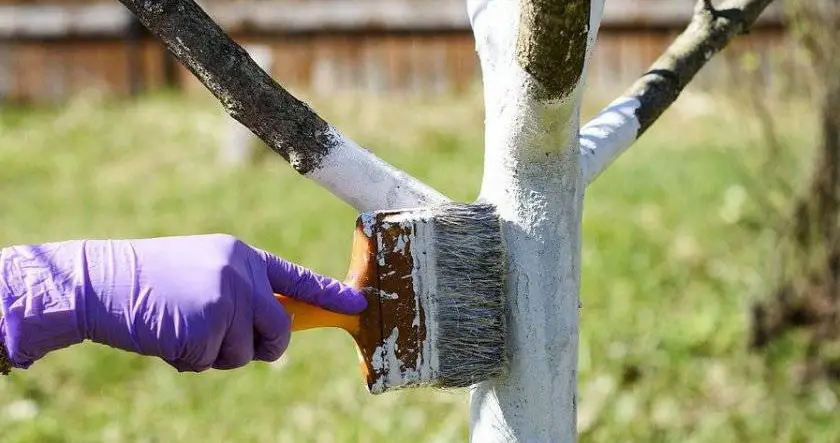
- Tools: Use a brush, roller, or sprayer for even application. A brush is often preferred for thorough coverage, especially on rough bark.
- Coverage: Apply the whitewash evenly over the trunks and main branches, extending it from the ground up to about 1 meter (3 feet) or more, depending on the tree’s size.
- Post-Application Care:
- Monitor: Check periodically for any signs of peeling or wear on the whitewash.
- Reapply: Depending on weather conditions and the solution used, you may need to reapply the whitewash later in the season or annually.
By following these guidelines, you’ll ensure that your fruit trees are well-protected against environmental stresses, pests, and diseases, fostering their health and productivity throughout the growing season.
Show Comments