Common Watering Mistakes
Many new gardeners inadvertently water tomatoes with cold tap water, which can stress plants, slow growth, and even lead to fungal diseases. Knowing the correct approach to watering these heat-loving crops is crucial.
Ideal Water for Irrigation: Temperature and Quality
For optimal tomato hydration, it’s best to use settled water warmed to 18-22°C. Cold spring water or ice-cold refrigerator water can shock the plant’s root system, hindering its development.
Water quality is also important. Rainwater, rich in natural trace elements, is ideal. If rainwater isn’t available, let tap water sit for a few hours to allow chlorine to evaporate.
Correct Watering Practices: Timing and Frequency
Aside from water temperature and quality, adhere to these watering guidelines:
- Open Soil: Water tomatoes in the evening post-sunset. This timing ensures soil moisture before daytime heat and helps leaves dry to prevent phytophthora.
- Greenhouse: Morning watering is suitable in greenhouses. On cloudy days, watering time is flexible.
Water frequency depends on plant stage and weather:
- Seedlings and Fruit Development: Water deeply 1-2 times weekly.
- Root Formation: Moderate watering once weekly suffices.
- Ensure soil remains neither parched nor overly wet.
Additional Tips
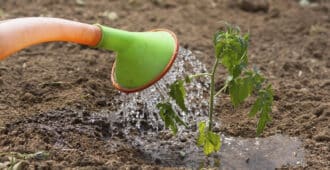
- Water at the base to avoid wetting leaves and stems.
- Use a watering can with a sprayer for even soil hydration.
- Mulch around plants with straw, hay, or grass clippings to retain moisture and suppress weeds.
- Avoid watering tomatoes on hot days to prevent leaf scorch.
By following these straightforward guidelines, you’ll ensure tomatoes receive proper hydration, fostering robust growth and a plentiful harvest.
Remember: Opt for warm, settled water and evening watering for thriving tomato plants!