To keep our plants thriving, it’s crucial to provide them with proper care, including adequate light, watering, and fertilization. While there’s a variety of fertilizers available, making your own at home can be cost-effective and environmentally friendly. In this guide, we’ll show you how to prepare an effective fertilizer using onion peels.
Materials Needed:
- Onion peels from several onions
- 1 liter of water
- Plastic bottle
- Filter or strainer
Step-by-Step Instructions:
- Collect Onion Peels: Save the peels from onions each time you use them until you have accumulated enough to fill a medium-sized bucket.
- Prepare the Peels: Once you have enough peels, crush them into medium or smaller pieces, either using scissors or your hands.
- Fill the Bottle: Place the crushed peels inside a plastic bottle, filling it up to about three-quarters of its height.
- Add Water: Pour the liter of water into the bottle, covering the onion peels completely. The quantity of peels used can vary, and the effect will remain the same.
- Cap the Bottle: Seal the bottle with its cap or with any other container that covers it securely.
- Let it Sit: Leave the bottle outdoors to sit for 24 hours, allowing the onion peels to infuse with the water.
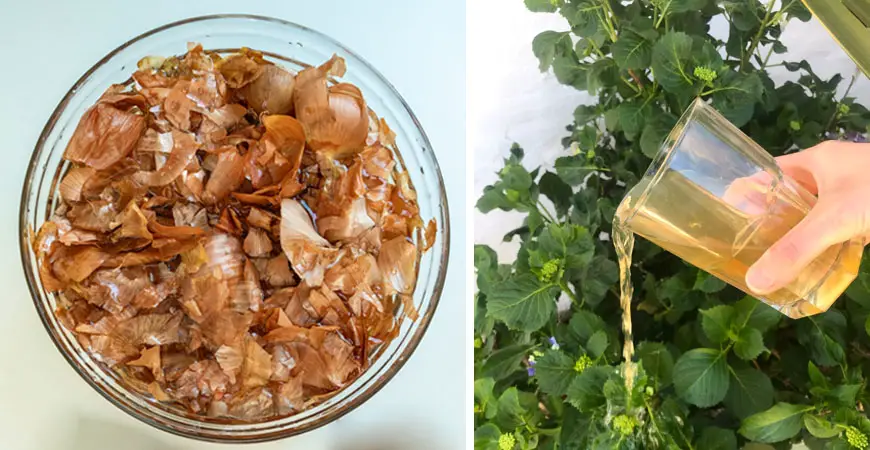
- Strain the Mixture: After 24 hours, strain the mixture using a cloth or strainer to remove the onion peels, leaving behind the onion water fertilizer.
- Application: This onion water fertilizer can be used for all types of plants, both indoor and outdoor. Water your plants as usual with this solution.
- Storage: Store any leftover onion water fertilizer in the refrigerator when not in use. It can last for up to two weeks.
- Frequency: Repeat this process every 20 days to ensure your plants receive regular fertilization.
Tips for Healthy Plant Growth:
- Light: Ensure your plants receive adequate light for photosynthesis. Plants with larger leaves require less light due to their higher chlorophyll content.
- Substrate: Choose soil with good aeration properties that retain water effectively. Clayey soils may retain too much water, while sandy soils may not retain enough nutrients.
- Water: Water is essential for plant survival and serves as a transporter of minerals. Regular watering ensures proper hydration and nutrient uptake by the roots, facilitating the transpiration process.
Show Comments