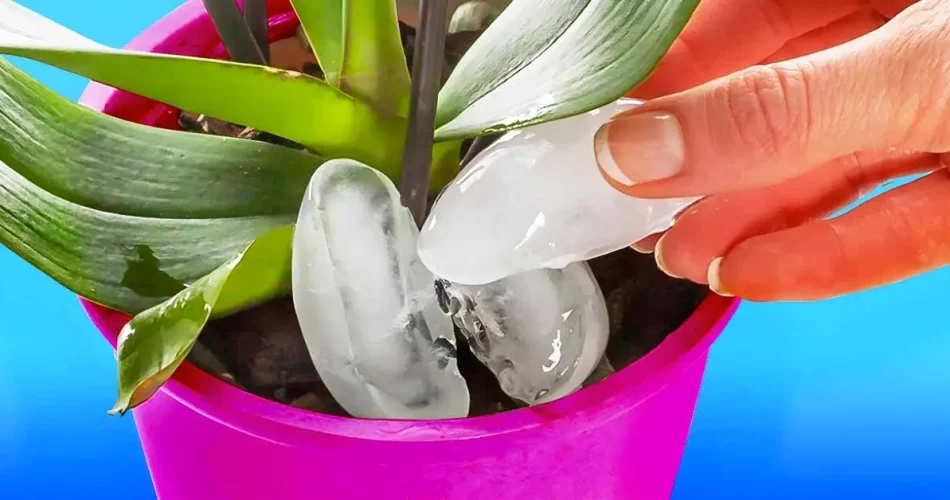
Forget the traditional watering can! To hydrate your orchids without the risk of drowning them, there’s an easy method: using ice cubes placed directly in the pot. Here’s how it works.

The Best Way to Water Orchids
Caring for orchids is manageable, but watering them correctly is crucial. Many mistakes can occur in this area.
How to Water Orchids with Ice Cubes
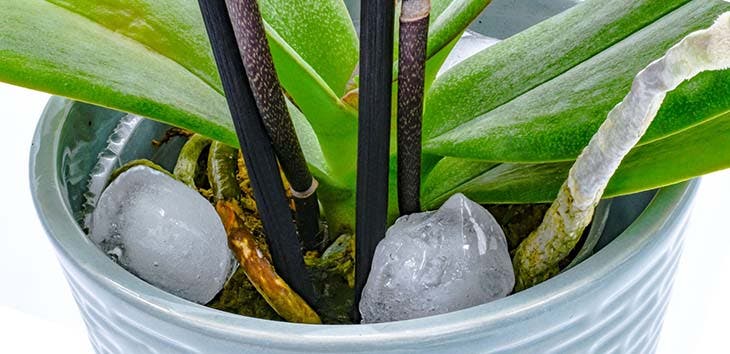
To properly hydrate your orchid, you ideally want to water it several times a week in small doses. This applies to all types of orchids, including Phalaenopsis (butterfly), Vanda, Cymbidium, and the popular Cattleya dowiana from Costa Rica. A great solution to save time is drip irrigation or the increasingly popular method of using ice cubes.
Simply place a few ice cubes on the substrate and allow them to thaw naturally. As the ice melts, the water seeps into the substrate, providing optimal hydration for the roots without the risk of overwatering. However, some growers worry that the shock from the cold water may harm orchids. What does recent research say about this?
Using Ice Cubes for Easier Care
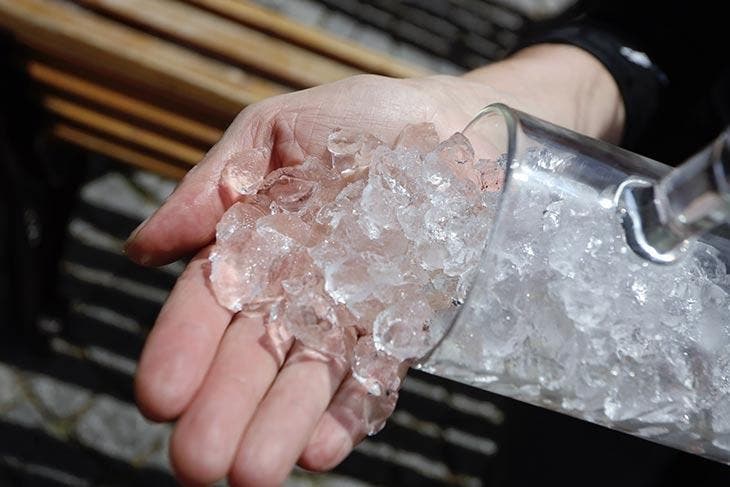
Experts have conducted studies comparing orchids watered with ice cubes to those watered with traditional methods. The findings were encouraging:
- Hydration Levels: Ice cubes did not reduce the overall water supply; in fact, they helped keep orchids perfectly hydrated without causing damage from waterlogging.
- Temperature Impact: The study focused on butterfly orchids and used three ice cubes per plant. The ice was kept away from the leaves, and while the substrate temperature dropped slightly, it did not harm the roots. Thawing occurred relatively quickly, and watering was done when the roots turned yellow instead of green.
The Right Substrate for Orchids
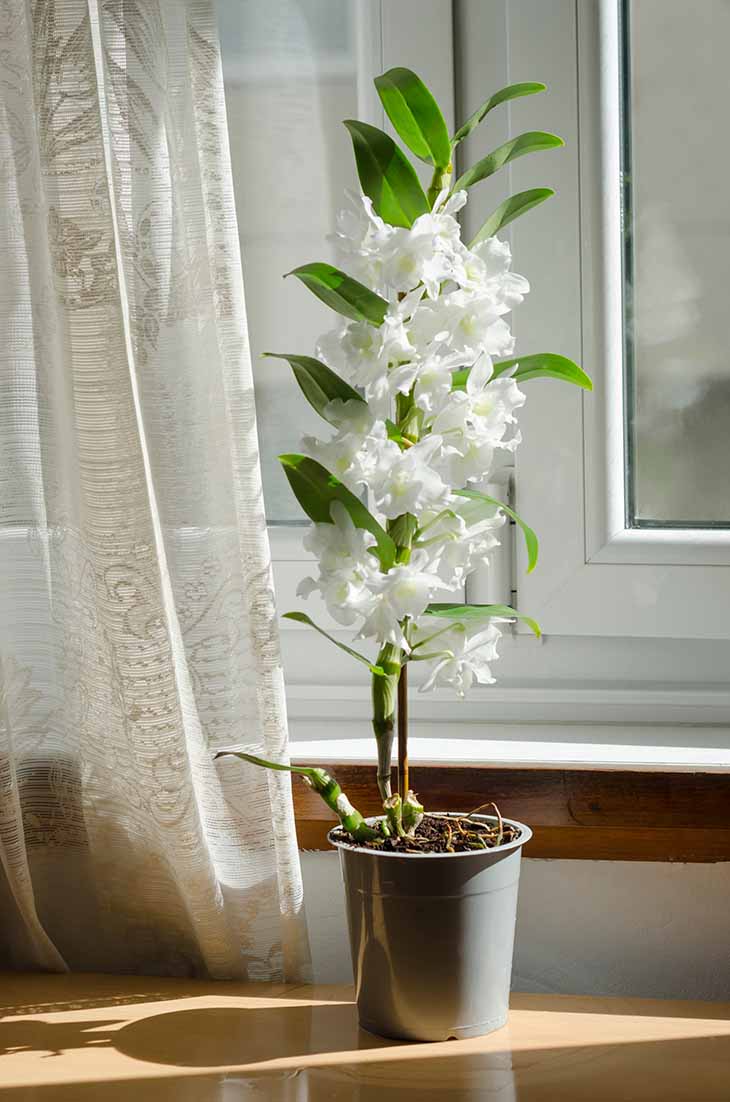
The substrate is vital for orchid growth and should consist of:
- Peat
- Cut beech leaves
- Fern roots (about 3 cm pieces)
- Bark from fir, oak, or pine
Other options include perlite, coco, cork, or coarse gravel. Orchids thrive in bright locations with temperatures around 20 degrees Celsius. It’s also beneficial to use liquid fertilizer every three to four weeks during the growing season and to repot every two years.
Watering Indoor Plants with Ice Cubes

For other indoor plants that are challenging to water—like bonsai—ice cubes haven’t caused any harm. However, this method may not be suitable for plants that require a lot of water.
Taking Care of Orchids Outdoors
In summer, orchids benefit from the temperature variations that encourage them to bloom again. Place them in the shade of a lightly foliaged tree, ideally suspended in baskets as they would be in nature. Water the base of the leaves gently, adjusting the watering frequency based on the weather: every 2-3 days during hot spells, and once a week or biweekly when it’s cooler and more humid.
Lastly, remember to tilt the plants after watering to let excess water escape from their leaves, preventing rot, especially in Phalaenopsis orchids.
By following these tips, you can ensure your orchids thrive beautifully!