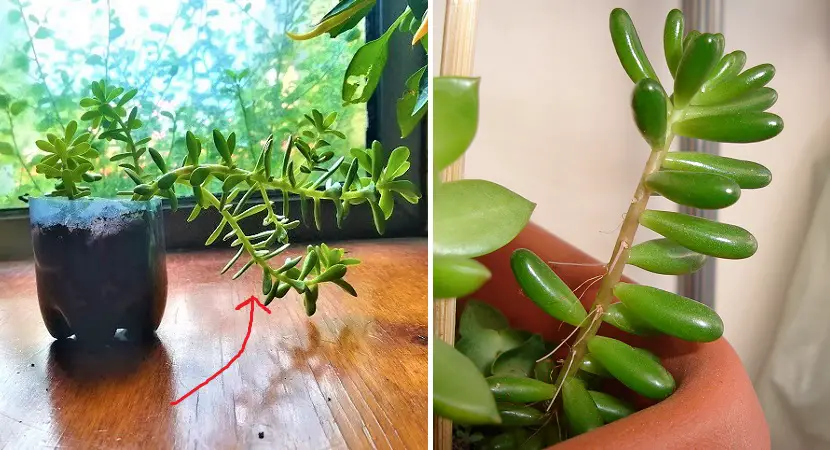
Stretching succulents are a sign that they lack sufficient natural light and are trying to reach for it. This phenomenon, known as etiolation, can lead to weak growth and pale, sparse leaves.
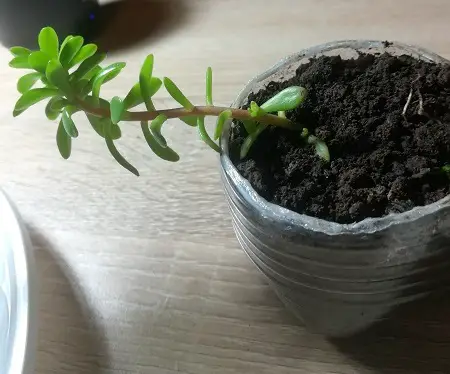
To prevent and reverse etiolation, follow these tips:
Assess the Signs: Look for smaller, sparse leaves, loss of color, leaning stems, and overall weak growth to identify etiolation in your succulent.
Prune and Trim: Remove any unhealthy or dull leaves from the lower part of the stem, leaving only the healthier ones at the top. Then, use sharp scissors or a cutter to make a clean cut close to the top of the stem.
Allow Healing Time: Let the cut stem rest in a cool, shaded area for three to five days to allow it to heal properly before replanting.

Replant Carefully: After the healing period, replant the succulent in a new pot with fresh soil. Ensure the stem is buried securely and has proper support.
Propagate Healthy Leaves: You can propagate new succulents from healthy leaves by placing them on soil in a separate pot. New plants will sprout from the ends of these leaves over time.
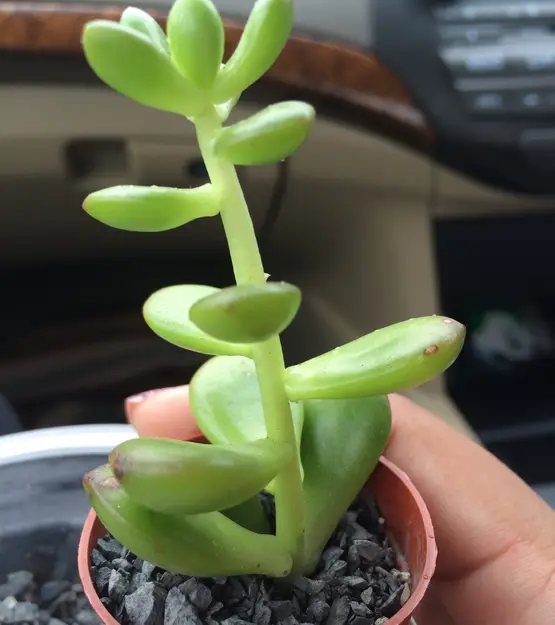
By following these steps, you can help your succulent recover from etiolation and thrive in a well-lit environment. Remember to provide adequate sunlight and avoid overexposure to prevent future stretching.