Orchids are a beautiful and diverse family of plants, and while they can be challenging to propagate, with the right approach, you can successfully grow new orchids at home. Not all orchids are suitable for every propagation method, but we’ll cover the most effective techniques for various types.
Understanding Orchid Types
Orchids fall into two main categories:
- Monopodial Orchids: These orchids grow upward from a single apical growth point. Examples include Phalaenopsis, Vanda, Angrecum, Gastrochilus, and Aerangis. They can be more challenging to propagate.
- Sympodial Orchids: These orchids grow outward with multiple growth points and are easier to propagate. Examples include Cattleya, Cymbidium, Cambria, and Oncidium.
1. Propagating by Peduncles or Lateral Shoots
Suitable Orchids: Phalaenopsis, Calanthe, Dendrobium, Catasetum, and Oncidium.
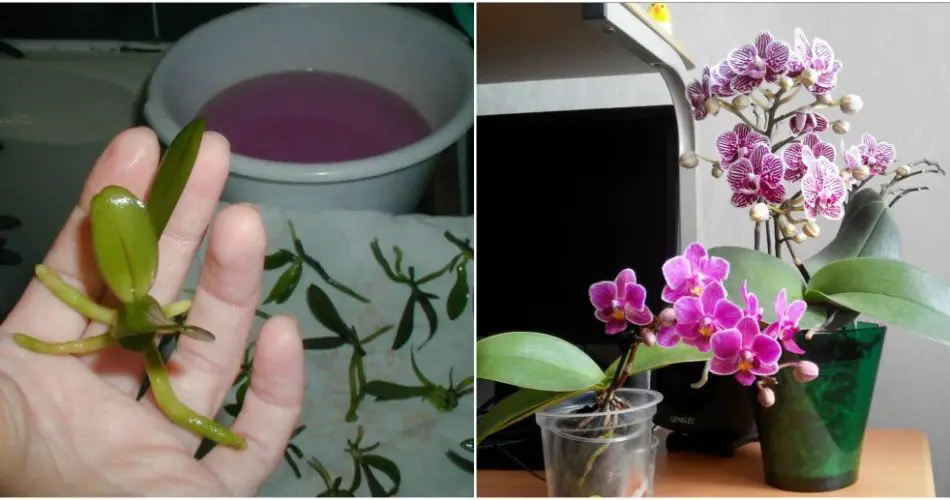
- Method: For Phalaenopsis and similar orchids, wait until the flower stalks produce side shoots or keikis (baby plants). Once these shoots develop leaves and roots, they can be cut from the main stem and potted separately. For sympodial orchids, wait until tubers form before separating and transplanting.
- Care: Provide high humidity and maintain a temperature of around 30°C (86°F). Newly transplanted orchids should be cared for like mature plants, with blooming expected in a couple of years.
2. Propagating by Cuttings
Suitable Orchids: Primarily sympodial orchids, though some monopodial types can be tried.
- Method: Select healthy shoots that are about 10 cm long and have 3 buds. Cut these shoots and treat the cut ends with activated charcoal. After a 3-day rest, place the cuttings in sphagnum moss or water with fertilizers. Cover with cling film to maintain humidity.
- Care: Maintain a temperature of around 20°C (68°F) and ensure the cuttings are ventilated. New shoots should emerge in a few months. For monopodial orchids, use water with added fertilizers and regularly check for rot, trimming the tip of the peduncle as needed.
3. Propagating by Dividing the Bush
Suitable Orchids: Sympodial orchids.
- Method: Divide the orchid bush when it has a well-developed root system. Cut the plant using a scalpel, ensuring each section has roots and pseudobulbs. Transplant the divisions into pots with orchid-specific soil.
- Care: Initially grow the divided orchids in a greenhouse to encourage rooting. For monopodial orchids, wait until the plant has at least 10 leaves before dividing. Treat cuts with charcoal and transplant sections into separate pots with orchid substrate. For faster growth of lateral shoots, use a spray solution (1000 ml water + 750 mg rhizome) every 10 days.
4. Propagating by Seeds
Suitable Orchids: Mainly used in commercial settings.
- Method: Orchids grown from seeds require specialized equipment and sterile conditions to ensure successful germination. This method is more complex and generally not recommended for home propagation.
Tips for Success
- Select the Right Method: Choose the propagation method based on the orchid type you have. Sympodial orchids are generally easier to propagate at home.
- Maintain Optimal Conditions: Ensure proper temperature, humidity, and care to support the growth of new orchids.
- Be Patient: Orchid propagation can be slow, so patience is key.
With these methods, you can successfully propagate your orchids and enjoy a thriving collection. Happy gardening!
Show Comments