In addition to enhancing the decoration, indoor plants add a real touch of lush greenery. As if we were constantly transported into an exotic and tropical atmosphere: it is a beautiful invitation to reconnect with nature. Not to mention that they are generally depolluting and relaxing. However, like any living thing, if not taken care of properly, plants tend to wither and rot. It is therefore important to know all the little subtleties of gardening that help keep them healthy.
How to stimulate the growth of your favorite plants? There are, of course, a whole range of parameters to take into account to promote beautiful flowering. But there are also some natural tips, often unsuspected, that work wonders on our plants. Did you know, for example, that rice has beneficial and energetic properties for plant health? Indeed, this cereal is very rich in starch, an essential element for better growth. From its raw grains to its cooking water, rice is very useful in making your plants stronger, more resilient and healthier.
Rice is an ingredient that is easily found in every kitchen. It enhances our dishes in various ways, but it is also a nutrient of choice for making plants flower more quickly. Let’s find out together how to use uncooked rice grains to boost their growth.
Three Ways to Use Rice in Plants
Here is how you can use rice to make your plants flower:
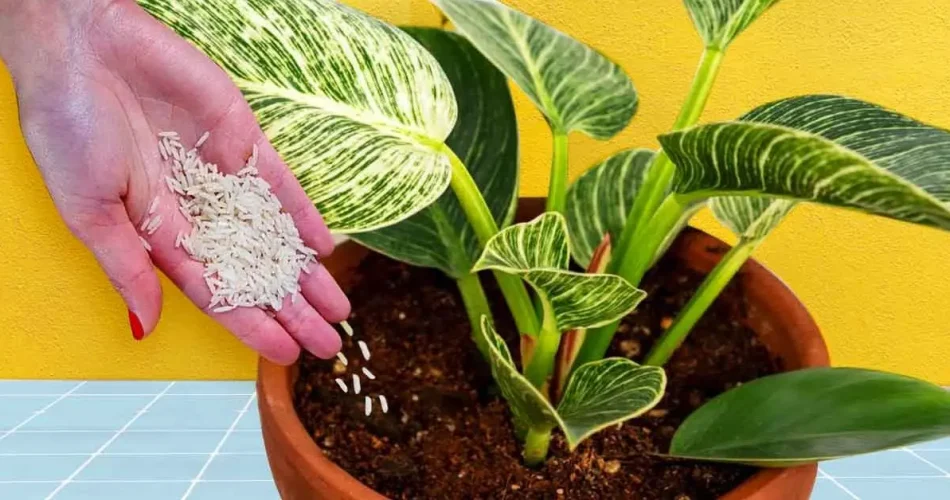
1. As a fertilizer in a pot
This method is a slow release fertilizer: this means that the starch in the rice will be released gradually. When watering the plants, the rice grains will begin to swell and release starch into the soil. Also, with each irrigation, the plant’s soil will be filled with nutrients thanks to the rice.
Application method:
You will need 1 tablespoon of rice for a large pot. If the jar is smaller, half a spoonful is enough. Sprinkle the rice grains around the stem of the plant, forming a circle around it. For a more effective impact, using a spoon, mix the rice with the soil on the surface. This way the rice will be absorbed more slowly, giving time to release the starch.
2. As a background fertilizer
This form of application is also a slow release fertilizer. You should apply it once every two months: don’t be afraid that the substrate will be full of rice plants. You should know that the rice we consume undergoes a refining process, so it is impossible for it to germinate.

Application method:
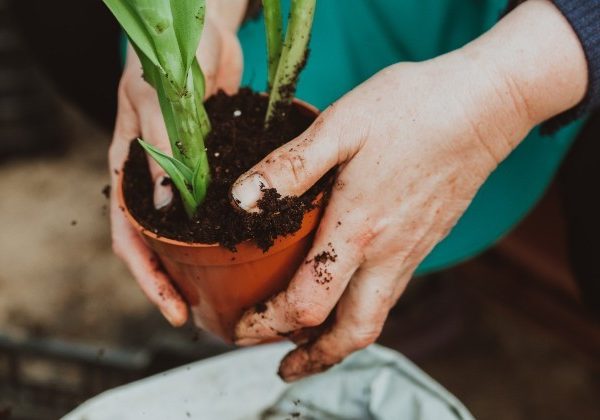
In a large pot, place some fertile soil at the bottom with two tablespoons of rice. Mix the two ingredients so that there is a homogeneous mixture at the bottom. You will notice that the rice grains turn into a grainy or powdery consistency like perlite. Next, support the plant you are going to transplant well and cover the rest with soil. In this case, in addition to the fertilizer, the rice will facilitate the drainage of your plant.
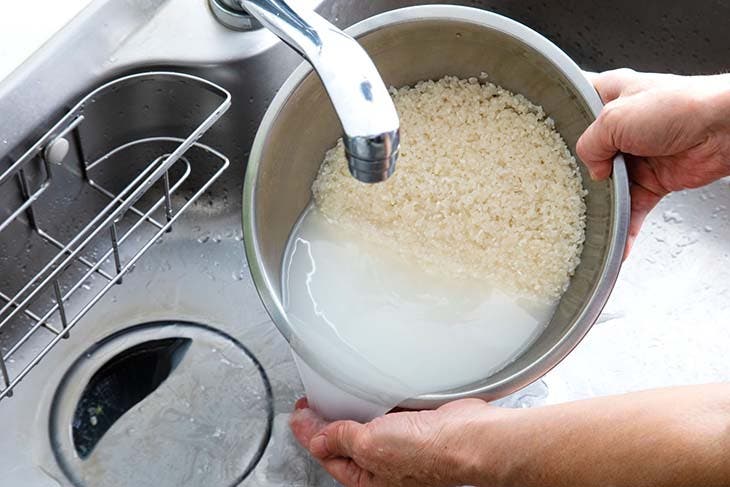
3. Use rice water
Unlike previous methods, rice water will act as a quick-release fertilizer . This method is recommended for plants that need to recover nutrients quickly. You should apply it once a week for 15 days and you will notice a clear difference in the growth of your plant.
Application method:
Pour half a cup of white rice into a one and a half liter plastic bottle, fill with tap water until the bottle is full. Cover and stir to release the starch, then leave for half an hour. Once this time has passed, it will remain in the form of a whitish liquid, it is an excellent fertilizer for your plants. Apply by watering: ensure that the rice at the bottom mixes well with the soil so that it retains its moisture.
The benefits of rice for plants
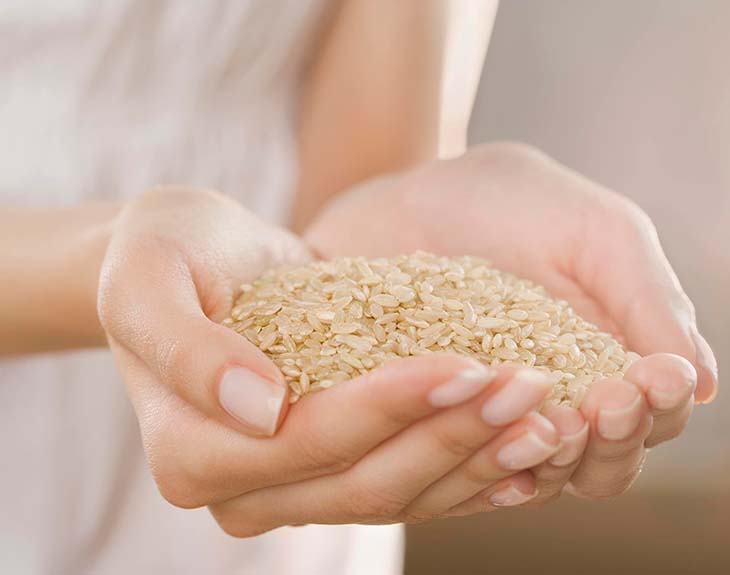
This ingredient promotes photosynthesis carried out by plants. No longer throw the rice cooking water down the sink: it is itself very nutritious, since it benefits from the vitamins, minerals and starch of the rice grains. By watering this water on your plants, you provide them with all the nutrients necessary for their health.
- The starch that rice releases provides additional energy which will best impact the development of your plant.
- Rice is full of nourishing properties: proteins, vitamins, fiber, amino acids, calcium, phosphorus, iron, zinc and potassium.
- Rice cooking water is a natural fertilizer: this gentle fertilizer will allow plants to grow more quickly and flower abundantly.
- Rice water is also a natural ecological weedkiller: the starch has the ability to fight against weeds.