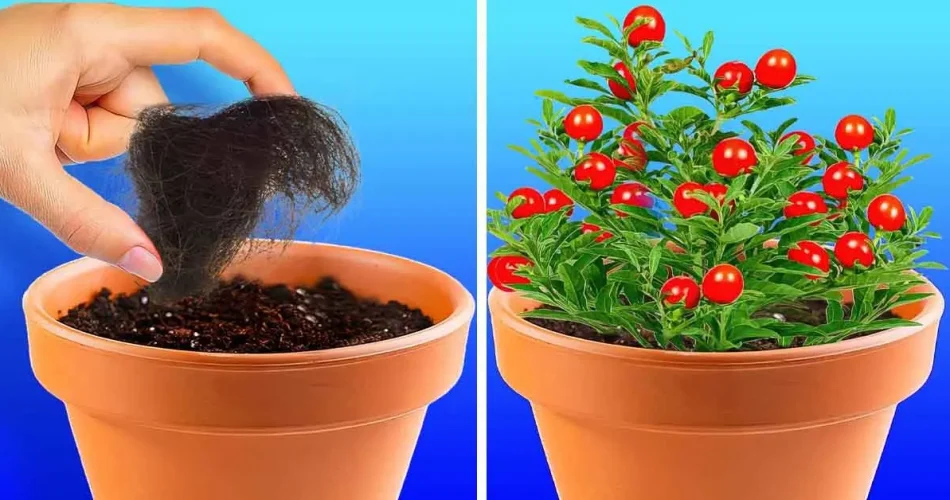
Instead of throwing away that clump of hair that you find on your comb after brushing your hair, consider giving it to your plants. Indeed, hair is rich in nutrients beneficial to plants, such as nitrogen. The latter is an essential nutrient for plants. It promotes the growth of plants and helps them produce new tissues.
You can fertilize your potted plants with your hair in two different ways.
Using hair as a slow-release fertilizer
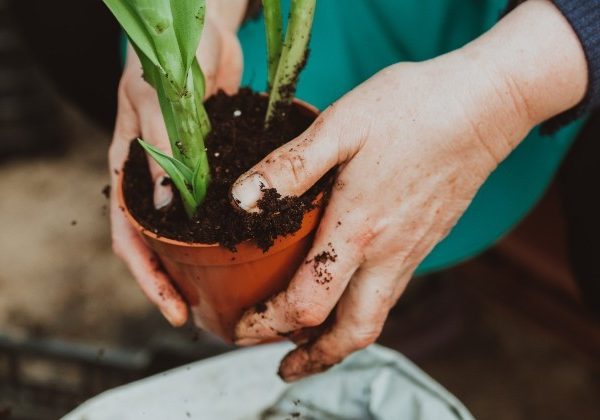
This method involves directly burying the tuft of hair that you find on your comb in the soil of your potted plants. Since hair takes a long time to decompose, it is advisable to place it at the base of plants with a long life cycle, so that they can benefit from the slow release of nitrogen and sulfur. This is particularly the case for onions, leeks, squash and even turnips.
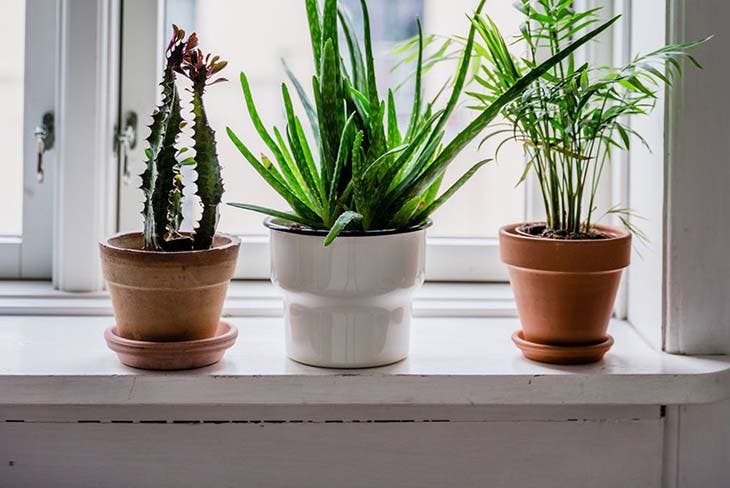
Using hair to enrich compost
The second method is to mix your hair with the compost you add to your houseplants. Composed of plant waste and organic matter, compost is also a good fertilizer for plants. This must be composed of one part carbonaceous materials, such as dead leaves, and two parts nitrogenous waste such as fruit peels or vegetable remains. Rich in nitrogen and proteins, hair is an organic material that can be added to compost to enrich it with nitrogenous materials.
Note that you should not fertilize your plants with colored or chemically treated hair. Your plants could actually absorb the chemicals in your hair.
Tip: hair is a good repellent to keep away moles, hares or deer. You can use them in your vegetable garden or at the foot of your fruit trees.
In addition to hair, what other organic materials can be used as natural fertilizers?
In addition to hair rich in nitrogen and proteins, you can also recycle the hair of your cat or dog, cut nails or even the feathers of your canary. Adding them to compost will allow you to enrich it, in order to better fertilize your potted plants, but also plants in the ornamental garden or vegetable garden.
The tuft of hair that you find in your brush can be recycled and used as natural fertilizer for your potted plants, or to enrich the compost with nitrogenous materials.