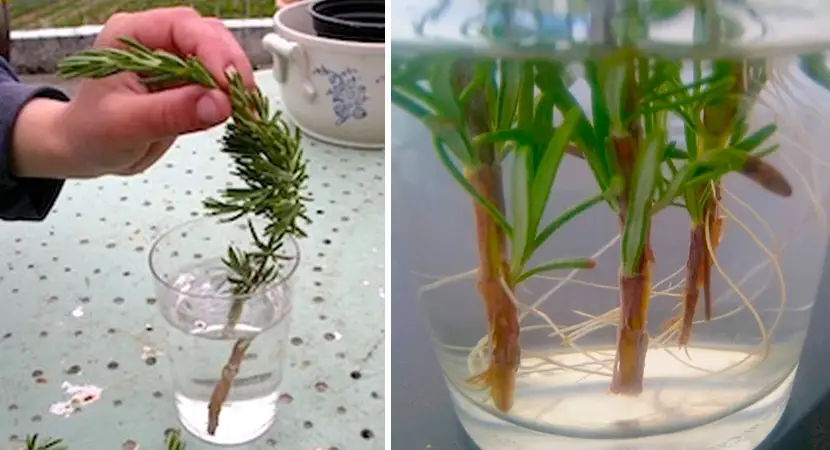

Rosemary is a delightful aromatic herb known for its rich flavor and versatile uses in cooking, infusions, and even beauty products. Native to the Mediterranean, this shrub not only enhances your culinary creations but also adds beauty to your home. If you’re interested in growing more rosemary, you can easily propagate it using just a twig and some water. Here’s a simple guide on how to do it successfully.

What You’ll Need:
- A glass jar
- Water
- A mature rosemary plant
- Scissors or a knife
Step-by-Step Guide to Propagating Rosemary

Step 1: Select and Cut a Twig
Choose a healthy branch from your mature rosemary plant. The twig should have a green stem and be at least 15 cm (6 inches) long. Use scissors or a knife to make a clean, diagonal cut.
Step 2: Prepare the Twig
Place the cut rosemary twig into a glass jar filled with water. Ensure that the water completely covers the base of the twig where the leaves have been removed.
Step 3: Remove Excess Leaves
Strip the leaves off the lower part of the twig to prevent them from rotting in the water. Let the twig rest in the jar of water overnight.
Step 4: Position and Maintain
Place the jar near a window where it can receive indirect light. Make sure to keep the water level consistent, topping it up if it evaporates.
Step 5: Monitor Initial Growth
After about a week, check the twig for signs of growth. Although there might not be noticeable changes immediately, keep the twig in the jar for continued observation.
Step 6: Observe Root Development
In approximately three weeks, roots should begin to form, and the twig might start to sprout. This rooting process can take a little longer depending on the conditions.
Step 7: Transplanting
When the roots reach around 15 cm (6 inches) in length, it’s time to transplant the rosemary. Prepare a pot with well-draining soil and make a hole for the roots. Gently place the rooted twig into the hole, ensuring that the soil does not cover the leaves.
Step 8: Plant Care
After transplanting, water the rosemary regularly but avoid overwatering. Ensure the soil stays moist but not soggy.
Tips for Caring for Your Rosemary

Light
Rosemary thrives in direct light but can be sensitive to prolonged exposure, especially during the summer months. If the sun is too intense, use a shade cloth or move the plant to a location with filtered light.
Watering
Rosemary prefers well-drained soil and does not need frequent watering. It’s adapted to drought conditions, so be cautious not to overwater. Maintain a balance to keep the soil moist without becoming waterlogged.
Temperature
This hardy plant prefers warm, temperate climates but can tolerate some extremes. Protect rosemary from freezing temperatures and sudden weather changes to ensure its health.
Pruning
Regular pruning helps maintain the plant’s health by removing dried or dead leaves and flowers. Prune rosemary frequently to encourage vigorous growth.
Soil
Fertilize rosemary once a year, preferably in spring or autumn, with organic matter such as worm compost or another type of organic fertilizer.
Pot Size
If growing rosemary in a pot, ensure it has a depth of at least 40 cm (16 inches) to accommodate the plant’s long roots and support robust growth.
Harvesting
To harvest rosemary, cut small branches, including those that are starting to dry or are still fresh. You can use these for cooking or drying to create a flavorful herb for various uses.
By following these steps and care tips, you can successfully propagate rosemary and enjoy its benefits in your home. Happy gardening!