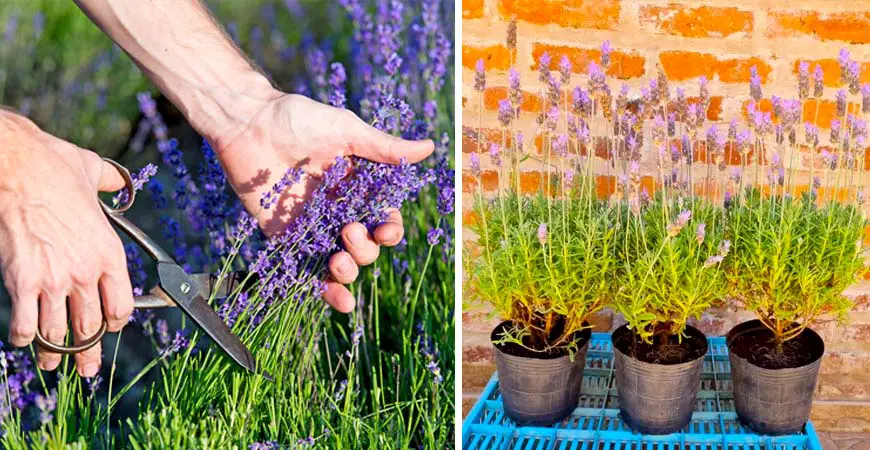
Lavender is a wonderful plant with aromatic and aesthetic benefits. Propagating lavender by cuttings is a cost-effective way to expand your collection. Here’s a step-by-step guide to ensure successful propagation:

Necessary Elements
- Lavender Cuttings: Healthy, non-flowering branches.
- Pruning Shears and Scissors
- Alcohol (95º) for disinfecting tools
- Flowerpot
- Substrate: Peat, sand, and coconut fiber mix
- Rainwater or Filtered Water
- Natural Rooting Agent: Black beans, coffee, lentils, or willow
- 5-Litre Water Bottle (bottom cut out for mini greenhouse effect)
Step-by-Step Process
- Select a Healthy Plant:
- Choose a robust lavender bush. Fall is ideal for taking cuttings.
- Look for non-flowering branches, around 10 cm in length.
- Prepare Cuttings:
- Select Branches: Choose woody stems with several nodes.
- Disinfect Tools: Clean pruning shears with 95º alcohol to prevent disease.
- Make the Cut: Cut branches just below a node.
- Trim Leaves: Remove leaves except those at the top. This directs the plant’s energy to root development.
- Prepare Cuttings: Trim secondary branches above the nodes. Make crosswise cuts on the apical branches to prevent water accumulation and fungus.
- Use Rooting Agent:
- Prepare Rooting Solution: Soak cuttings in a natural rooting agent. Choose one of the following:
- Black Beans: Soak in water for 10-15 minutes.
- Coffee: Boil a handful of coffee grounds in 0.5 liters of water. Cool and use as a soak.
- Lentils: Blend soaked lentils, strain, and use the liquid.
- Willow: Boil willow branches and mix with cold water. Let sit for 4 weeks, then use as a soak.
- Prepare the Pot and Substrate:
- Mix Substrate: Combine peat, sand, and coconut fiber.
- Water Substrate: Moisten with rainwater or filtered water. Allow it to absorb for about 10 minutes.
- Plant the Cuttings:
- Make Holes: Use a stick or finger to create holes in the substrate.
- Insert Cuttings: Place cuttings into the holes and press soil around them.
- Initial Watering: Water with diluted rooting agent. This gives the cuttings a strong start.
- Create a Mini Greenhouse:
- Cover Cuttings: Use the bottom-cut water bottle to cover the cuttings. This creates a humid environment that helps with rooting.

Additional Tips
- Light and Temperature: Place the pot in a warm, bright location with indirect light.
- Watering: Keep the substrate moist but not waterlogged.
- Root Development: After a few weeks, check for root growth by gently tugging on the cuttings. Once established, they can be transferred to larger pots or the garden.
By following these steps, you’ll be able to propagate lavender successfully and enjoy the beauty and fragrance of new plants in your garden. Happy gardening!
Show Comments