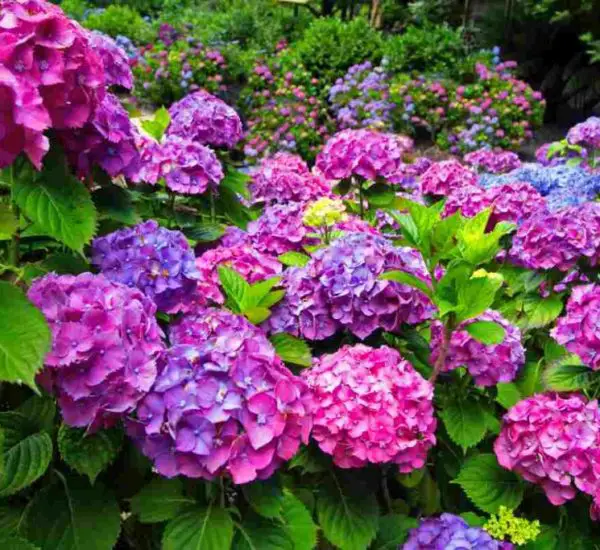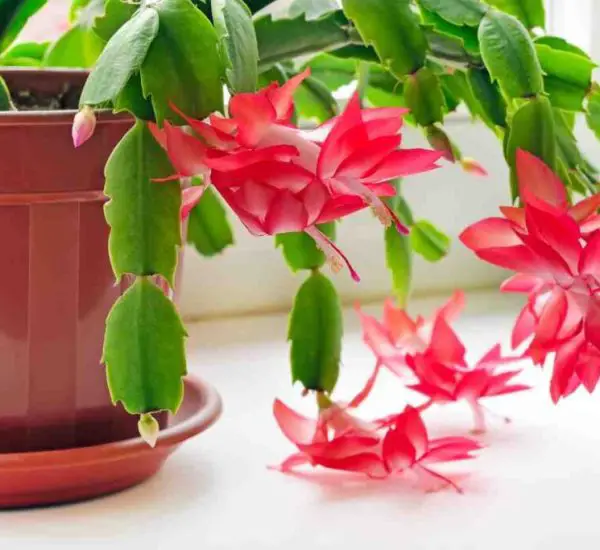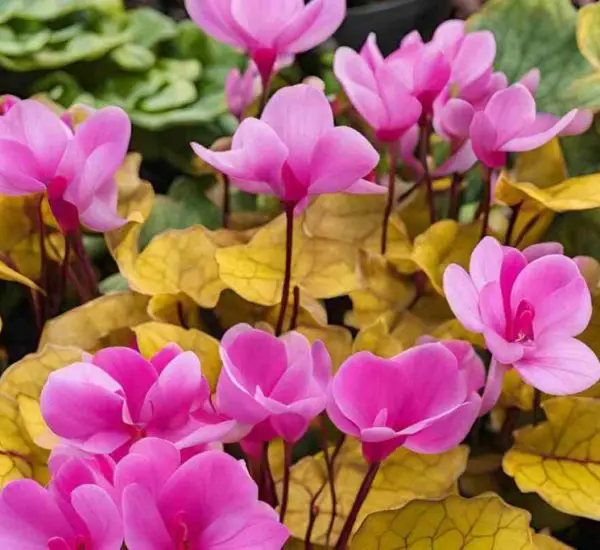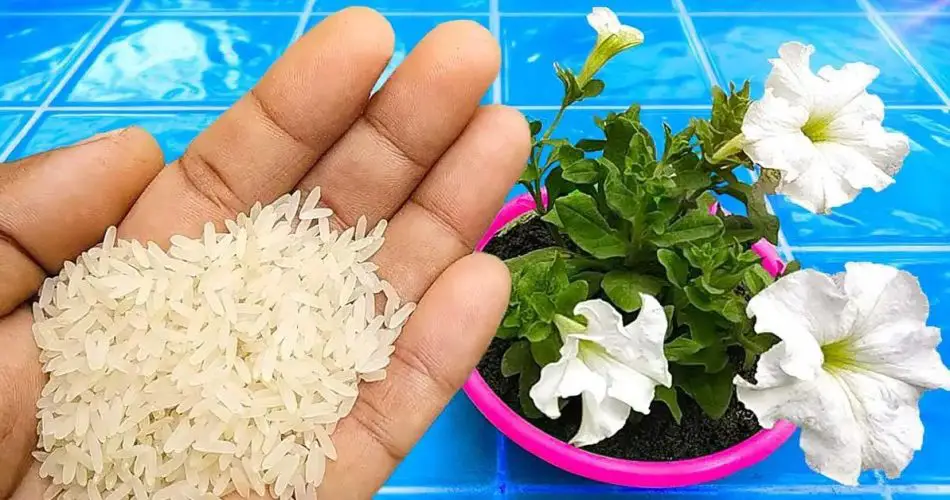
Flowers bring a unique charm and colorful freshness to your garden, but to ensure their growth and longevity, they require proper care and nutrients. Instead of resorting to chemical fertilizers that can harm the environment, consider a healthier, eco-friendly alternative. Here’s how to create a natural rice-based fertilizer to help your flowers flourish!
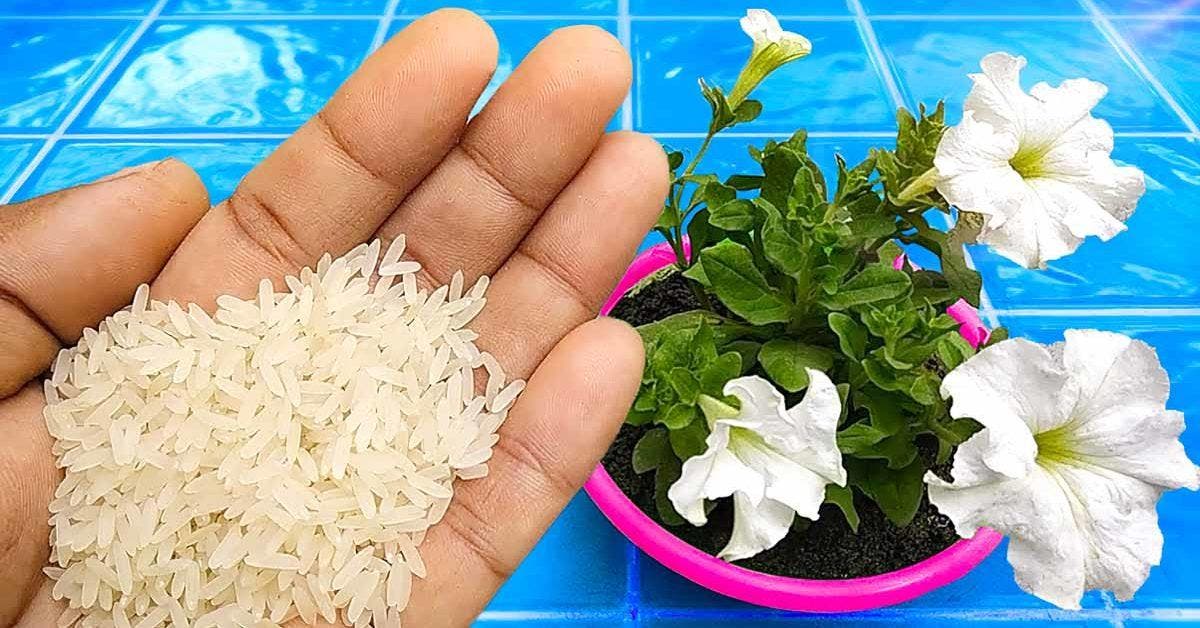
How to Use Rice for Garden Fertilizer
Industrial fertilizers are often not the best solution for cultivating beautiful, healthy plants. While they can promote growth, they may also have harmful effects. With natural ingredients, you can achieve equally satisfying—if not better—results. Using organic fertilizers allows you to grow twice as many flowers while respecting the environment, and you probably already have everything you need at home!
Benefits of White Rice
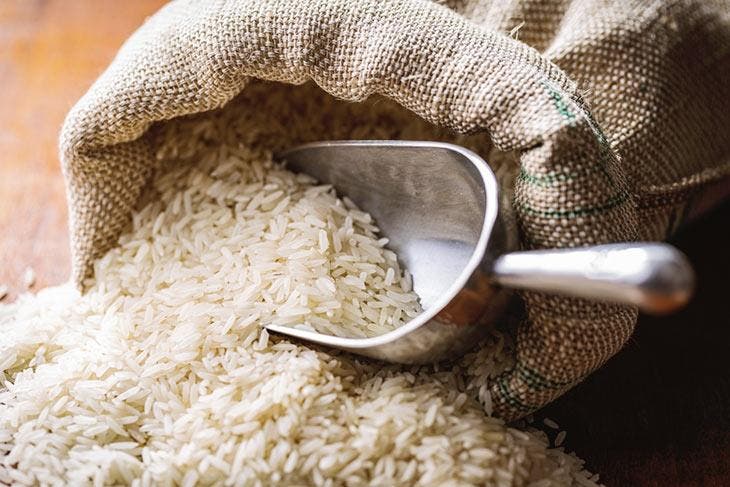
Many people don’t realize that white rice is an excellent natural fertilizer. This widely consumed food is rich in starch, carbohydrates, and vitamin B, providing essential nutrients for plants. It also contains minerals like nitrogen, phosphorus, magnesium, and potassium, which are ideal for promoting growth and flowering.
How to Prepare the Fertilizer
To make this natural fertilizer, use untreated grains without additives. Follow these steps:
- Mix Rice and Water: Pour 100 g of rice into a container and add 1 liter of water.
- Soak: Let it soak for about 24 hours to allow the rice to release its nutrients into the water.
- Filter: After soaking, the rice will have softened. Mix again and strain through a sieve. You can use the liquid as fertilizer while applying the leftover grains to the soil as a natural organic boost.
- Dilute: Before use, dilute the rice water (1 cup of fertilizer for 10 liters of water). You can then apply it to the soil around your plants or on the leaves, depending on their specific needs.
Tip: Use this rice-based fertilizer every two weeks for vigorous plants and abundant blooms.
When Is the Best Time to Fertilize?
Plants benefit most from fertilizers during their growing season, making early spring the ideal time to fertilize as they emerge from dormancy. However, remember that each plant has unique fertilizer needs. For instance, acid-loving plants like azaleas and blueberries thrive in a more acidic soil pH. Additionally, flowering or fruiting plants require extra phosphorus to stimulate growth in buds, fruits, and flowers.
By using this natural fertilizer, you can cultivate a vibrant and healthy garden!