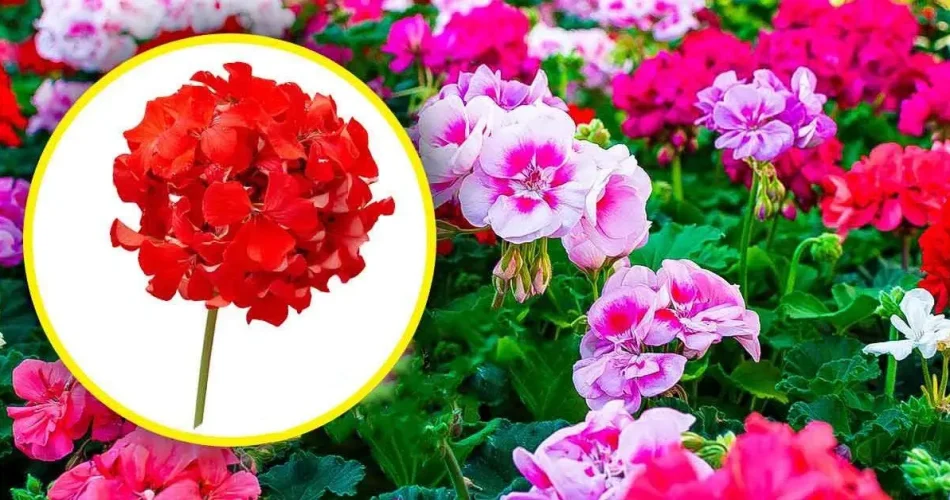
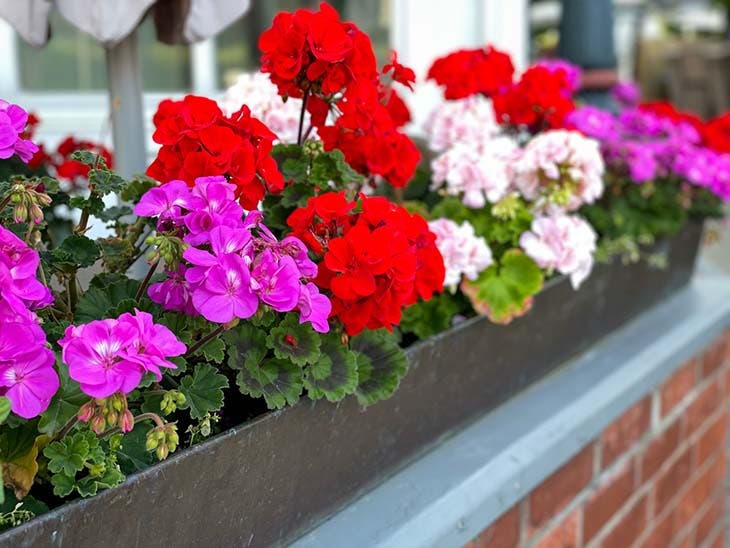
Which hardy plant do you most often see decorating house balconies during the hot period? Without a doubt the geranium! Star of the summer season, it proudly stands out with its sublime, abundant and colorful flowers, which bloom in spring and last until the end of summer. Impossible to go unnoticed, geraniums give a wonderful lush character to our environment. Very popular and coveted by everyone, geranium is the ideal plant for coloring terraces and planters. Ranging from red to blue, including pink and mauve, its chromatic palette brings a real touch of freshness and cheerfulness to the house.
With its slightly rounded leaves and its unique character, this plant is very easy to grow. Geranium loves sun, prefers rich soil or well-drained potting mix, and it needs a little water. But did you know that it is possible to multiply it indefinitely by simple cuttings? You will be able to reproduce all your favorite species from stem cuttings of already existing plants. As a bonus, you don’t need to have a green thumb to successfully complete this operation. Quickly find out how to do it by following these quick and easy techniques.
How to grow new geraniums?
For this cutting, you will need a few tools: very sharp and above all perfectly disinfected pruning shears, peat pots, a fertilizer specially dedicated to geraniums (or a homemade mixture of sand, peat and potting soil).
Here are the steps to follow to propagate geraniums at home :
1. Make a cut
- The first thing to do is to choose a branch from the mother plant and cut it: this is called the cutting, that is, a stem from which a new plant can be born.
- Of course, you shouldn’t choose at random! Always opt for a healthy, young and healthy stem. Its color should still be greenish. Its size should be approximately 10 to 15 cm in length and it should have at least 5 leaves.
- Use the pruning shears and cut the stem above a node (this is where a new branch or leaf develops). Also prefer branches that have not yet flowered and which tend to root more easily.
- After cutting the branch, remove the bottom leaves (keep the top ones) and the buds nestled on the stem.
- Place the cutting in a glass of water for a little while.
2. Prepare the jars
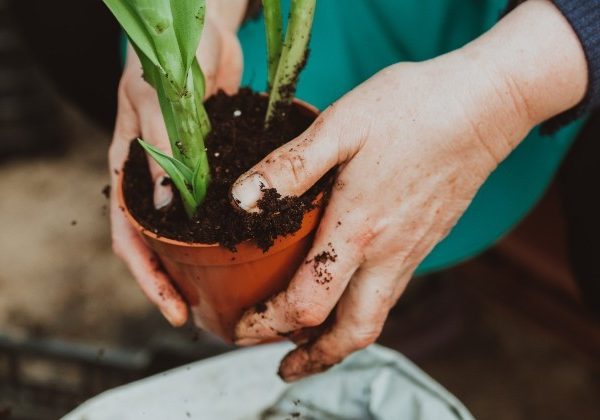
Choose medium-sized terracotta pots and fill them with a mixture of equal parts peat, potting soil and sand: these are the essential elements to make the soil well-draining and well-packed.
Make a hole in the center of the pot to put the cutting in. If you want to have very abundant geraniums, simply plant several cuttings in the same pot: if it is large enough, plant 3 cuttings maximum. However, it is not recommended to plant too many in the same pot, because as they grow, the geraniums could suffocate each other.
Warning: if you have doubts or cultural problems, it is better to seek help from a professional.
3. Take care of it
Water the soil well and make sure it never dries out completely. Next, place your geraniums in a very bright location, but not in direct sunlight. Be sure to always keep the soil moist, without excessive watering either.
After about 2 weeks, the cuttings should have already developed their first roots. You will then see new geranium plants gradually appear.
4. Repot the plant
If you only planted one cutting per pot, you can save it until it grows enough to transport. However, when you have planted several cuttings in the same pot, repotting may quickly become necessary. Then choose a larger pot, preferably terracotta and with drainage holes.
Regarding the soil, opt for universal soil or specific soil for geraniums, placing a layer of expanded clay or gravel on the bottom.
At this stage, your new geranium plant is ready: take particular care of it to benefit from abundant flowering.
When is the best time to propagate geraniums?
Not all times of the year are necessarily suitable for trying to propagate geraniums. The best time is early spring, when the gradual increase in temperatures coincides with root development and cutting growth.
In fact, this plant can also multiply during the hot months, especially in summer, although it is advisable to avoid the period when temperatures are around 30°C. On the other hand, it is better not to waste your time trying to grow geraniums during the cold season. In winter, due to low temperatures, propagation attempts are almost never successful.