Lemons are not just delicious; they are packed with vitamin C, fiber, magnesium, and potassium, making them a healthy choice for any diet. If you’re interested in growing your own lemon tree at home, it’s a rewarding project that starts with germinating lemon seeds. Here’s how you can do it efficiently.

What You’ll Need:
- 1 lemon (to extract seeds)
- Seedbed or a suitable germination container
- Clamp
- Water
- Coconut fiber
- Worm hummus
Step-by-Step Instructions:
- Extract the Seeds:
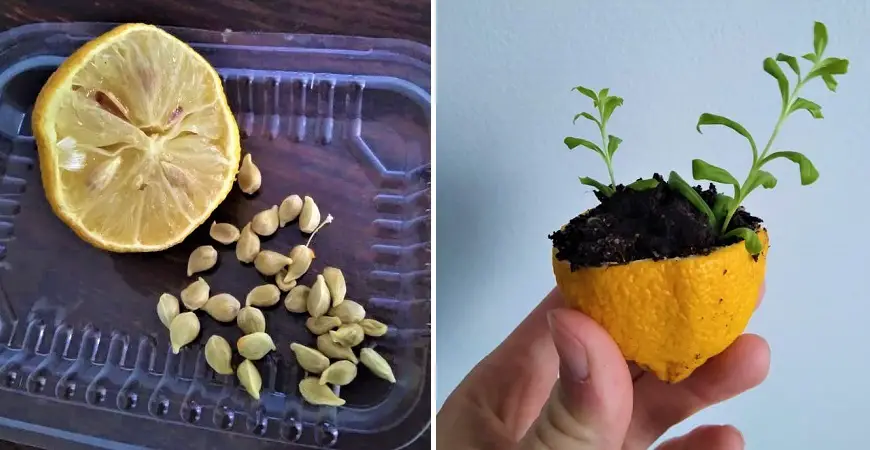
- Cut open a lemon and carefully remove the seeds using your fingers or tweezers. Be gentle to avoid damaging the seeds.
- Prepare the Seeds:
- Rinse the seeds thoroughly. Use your fingers or tweezers to remove any remaining pulp or seed coating.
- Prepare the Seedbed:
- Get a seedbed or a germination container ready. Mix 60% coconut fiber and 40% worm hummus to create an ideal growing medium.
- Open the Seeds:
- Find the thinner, pointed end of each seed and slightly open it. This helps facilitate germination.
- Plant the Seeds:
- Place the seeds horizontally in the prepared seedbed. Cover them with about 1 to 2 cm of the coconut fiber and worm hummus mixture.
- Germinate:
- Put the seedbed in a warm, dark place to promote germination. The seeds should stay in these conditions for about 15 to 20 days.
- Monitor Growth:
- After 15 to 20 days, you should see the seeds starting to sprout. Once the seedlings grow a bit, transfer them to a larger pot to continue growing.
Caring for Your Lemon Tree

A lemon tree is quite hardy but requires specific care to thrive. Here’s how you can ensure it remains healthy and productive:
- Light:
- Lemon trees need a lot of sunlight. Aim for 6 to 8 hours of direct sunlight daily. During the winter, make sure it gets enough light by placing it in a well-lit spot.
- Temperature:
- The ideal temperature range is between 17°C and 27°C. Protect the tree from cold temperatures, frost, and drafts. In winter, consider using a fabric cover or placing the tree near a wall to shield it from the cold.
- Watering:
- Water the tree 2 to 3 times a week during hot periods. Ensure the soil stays moist but avoid waterlogging. Adjust the frequency based on soil type and ambient temperature.
- Soil:
- Use a semi-light, well-draining soil with a neutral pH. Incorporate organic matter like coconut fiber and worm hummus to enhance soil quality.
- Pruning:
- Prune your lemon tree once a year, preferably in winter when it’s less active. Remove dead or unattractive branches to encourage healthy growth.
By following these steps and tips, you’ll be well on your way to growing a thriving lemon tree, adding both beauty and fresh lemons to your home. Enjoy your gardening journey! 🍋🌿
Show Comments