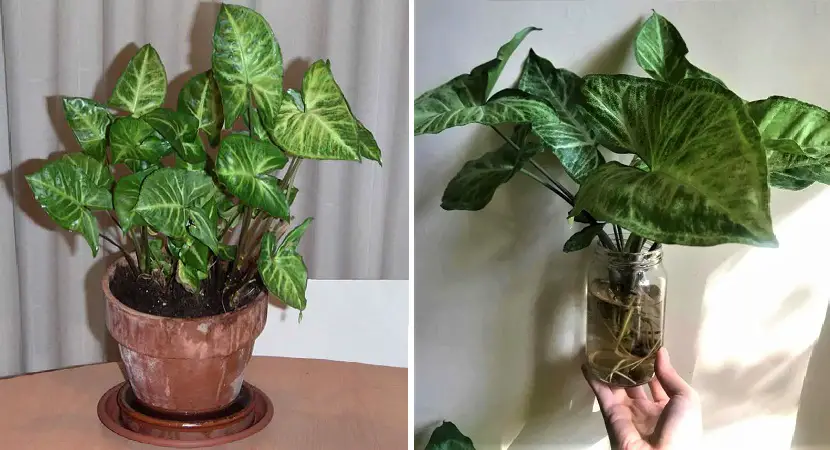
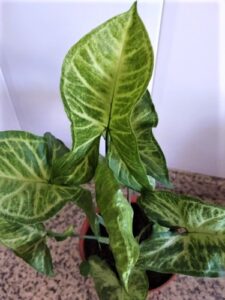
The Syngonium plant, often known by names such as Arrowhead, Chapis, American Everlasting, Emerald Jewel, or Five Fingers, is a popular choice for indoor gardeners due to its attractive foliage and ease of care. Native to tropical regions of America, this climbing plant thrives with proper attention and can be a beautiful addition to any home. Here’s how to care for and propagate your Syngonium plant effectively.
Basic Care for Syngonium:
- Light:
- Requirement: Prefers bright, indirect light. Direct sunlight can cause leaf burn.
- Solution: Place the plant in a well-lit room but away from direct sun rays.
- Temperature:
- Requirement: Thrives in temperatures above 13°C (55°F). Cold temperatures can stress the plant.
- Solution: Keep the plant in a warm environment, away from drafts or cold spots.
- Airflow:
- Requirement: Needs a location with good air circulation.
- Solution: Ensure the plant is not in a stuffy or overly humid area.
- Humidity:
- Requirement: High humidity is essential, especially during summer and spring.
- Solution: Water the plant regularly when the topsoil is dry and spray the leaves with water at least three times a week.
- Fertilization:
- Requirement: Beneficial during the growing season.
- Solution: Apply liquid fertilizer mixed with irrigation water during the hot months.
- Pruning:
- Requirement: Minimal pruning is needed.
- Solution: Remove lower leaves as they become dull. Regularly inspect for any necessary cuts.
- Transplanting:
- Requirement: Ideal during transplantation.
- Solution: Use a clean, disinfected tool to cut the stem and replant to encourage strong growth.
How to Propagate Syngonium:
- Select and Cut:
- Cutting: Choose a healthy cutting from the mother plant, preferably the tip with several leaves and at least two nodes.
- Rooting in Water:
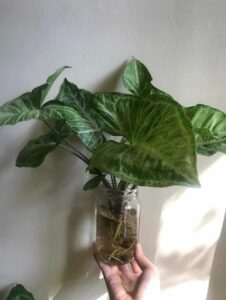
- Preparation: Place the cutting in a glass of water, ensuring the nodes are submerged.
- Observation: Roots will begin to form within a few days. Wait until they reach at least 3 cm (1 inch) in length.
- Transplanting:
- Pot: Choose a pot with a diameter of at least 15 cm. Ensure it has good drainage holes.
- Soil: Plant the rooted cutting in soil or continue to grow it in water, based on your preference.
Pest Management for Syngonium:
- Leaf Drop:
- Cause: Insufficient water or exposure to cold temperatures.
- Solution: Adjust the plant’s location and increase watering frequency.
- Root Rot:
- Cause: Overwatering.
- Solution: Remove damaged parts and allow the soil to dry out before resuming watering.
- Leaf Drying:
- Cause: Exposure to direct sunlight.
- Solution: Relocate the plant to a more shaded area.
- Cotton Scale:
- Symptoms: Whitish, cotton-like spots on the underside of leaves.
- Solution: Remove by hand or use insecticides designed for scale insects.
- Spider Mites:
- Symptoms: Yellowing leaves and dusty texture.
- Solution: Increase the frequency of leaf spraying. If needed, apply appropriate insecticides.
By following these care tips and propagation methods, you can enjoy a healthy and vibrant Syngonium plant that will thrive in your home.
Show Comments