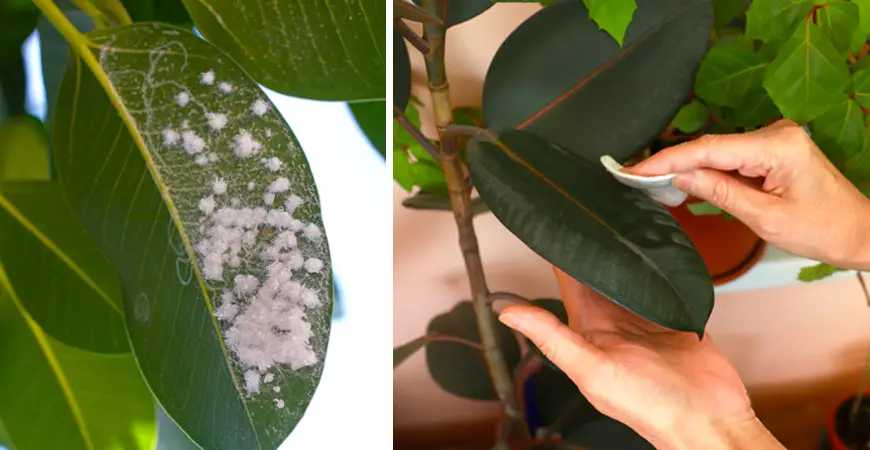
Cottony cushion scale insects can be a significant problem for plant lovers. These pests, resembling small cotton balls, attach to the leaves and suck out the plant’s sap, leading to weakened plants and potential death if left untreated. Their presence is often indicated by sticky, blackish spots on the leaves—essentially their honeydew excrement. Fortunately, there are effective homemade remedies to tackle these pests and prevent their return.

1. Alcohol and Cotton

- How It Works: Alcohol acts as a solvent, dissolving the protective waxy coating of the mealybugs, causing them to dehydrate and die.
- How to Use: Moisten a cotton ball with rubbing alcohol (isopropyl alcohol) and gently dab it on the affected areas, especially the underside of the leaves where mealybugs often hide. Ensure that you cover all the pests thoroughly, as any survivors can quickly repopulate. Repeat every few days until the infestation is under control.
2. Bar Soap and Water

- How It Works: The soap creates a sticky barrier that suffocates the mealybugs and disrupts their feeding.
- How to Use: Dissolve a piece of bar soap in warm water to create a soapy solution. Once it becomes viscous, apply it to the affected plants using a watering can or spray bottle. This method should be repeated weekly to ensure that all mealybugs are eliminated and to prevent any new ones from establishing.
3. Garlic and Water

- How It Works: Garlic acts as a natural insect repellent with its strong odor and antimicrobial properties.
- How to Use: Crush 75 grams of garlic and let it steep in hot water until it cools down. Strain the mixture and use a spray bottle to apply it to the affected areas of the plant. Garlic’s potent smell can help deter mealybugs and can be particularly effective on plants that are already somewhat infested. Repeat every three days for best results.
Additional Tips
- Regular Inspection: Check your plants frequently, especially the underside of leaves, where mealybugs are most likely to hide. Early detection can prevent severe infestations.
- Immediate Action: Start treatment as soon as you notice mealybugs to prevent them from spreading.
- Humidity Management: Mealybugs thrive in dry environments. To reduce the risk, increase humidity around your plants by placing containers of water near heat sources or radiators.
- Isolation: If a plant is heavily infested, isolate it from other plants to prevent the spread of mealybugs.
- Cigarette Water: An alternative treatment involves soaking six cigarettes in water for at least two hours. Use this liquid to water the affected plants, but be cautious of the strong smell and potential harm to the plant if overused.
- Preventive Care: Cottony cushion scale insects often attack stressed or weakened plants. Regular pruning, proper transplantation, and use of organic fertilizers can help keep your plants healthy and less susceptible to pests.
- Watering Practices: Ensure you’re watering plants according to their specific needs. Overwatering can lead to conditions favorable for mealybugs and other pests.
Identification
Cottony cushion scale insects are oval-shaped, light-colored pests covered in a cotton-like substance. They appear in clusters and leave behind brownish excrement on the leaves, primarily found on the undersides.
By using these homemade remedies and following preventive measures, you can manage and eventually eliminate cottony cushion scale infestations, ensuring your plants remain healthy and vibrant.