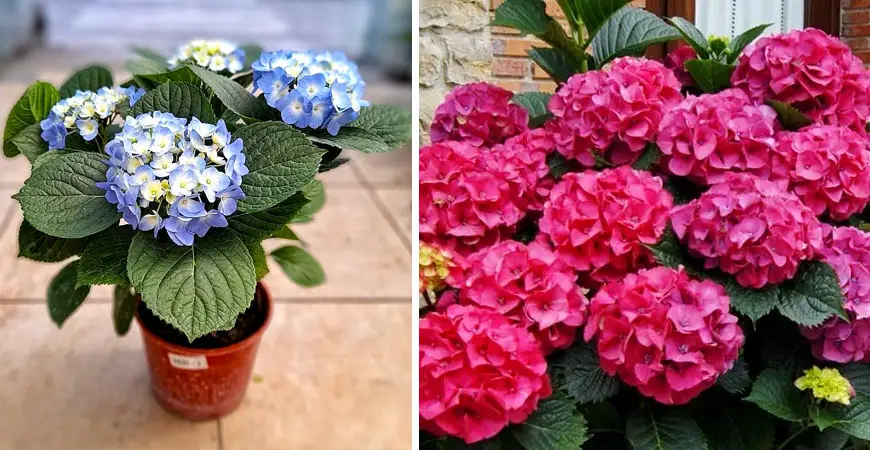
Hydrangeas are renowned for their large, vibrant flowers, typically seen in shades of pink, white, and blue. Yet, did you know that with a few simple techniques, you can easily modify the color of these blooms to suit your preferences?
The key lies in understanding the soil’s pH levels and applying the appropriate methods to achieve your desired hues.
1 – Maroon Flowers
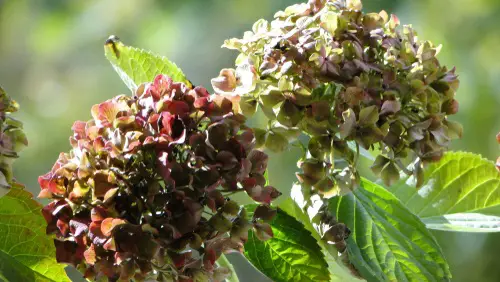
The color of hydrangea flowers is closely tied to the pH of the soil they’re planted in. To attain maroon-colored blooms, aim for a pH level of 6 to 6.5 by adding Aluminum Sulfate to the soil. However, it’s crucial to note that prolonged alteration of the soil’s acidity may affect the plant’s health. Therefore, use this method sparingly to allow the hydrangea to return to its natural color and vitality.
2 – Deep Blue Flowers
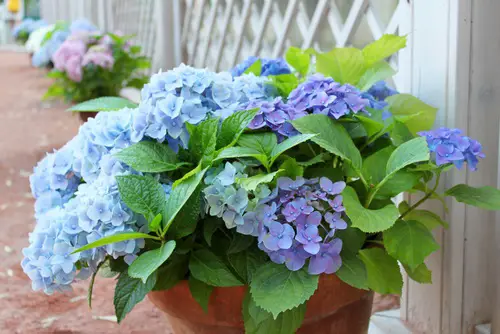
For vibrant blue hydrangea blooms, lower the soil’s pH to below 5, creating an acidic environment ideal for these plants. Create a homemade aluminum sulfate solution by mixing 2 grams of the compound with a liter of water. Apply this mixture to the soil every three days to maintain the desired pH level and intensify the blue tones of the flowers.
3 – Very White Flowers

Transforming hydrangeas into a pristine white hue requires raising the soil’s pH to 8, a more challenging task. Incorporate fertilizers rich in Nitrogen and Phosphorus to achieve this alkaline environment. However, monitor the plant closely and resume watering with neutral water if signs of stress or weakness appear, ensuring the plant’s health is not compromised.
4 – Pink Flowers

Pink hydrangeas are a common sight, often resulting from a decrease in soil acidity due to regular watering with conventional water containing lime. To enhance the pink tones, elevate the soil’s pH by introducing calcium nitrate or wood ash. Remember, prolonged alterations to the soil’s pH can impact the plant’s well-being, so exercise caution and prioritize the plant’s health.
Understanding Soil pH: Soil pH influences its drainage and permeability, with values above 8.5 leading to waterlogging. Acidic soils have pH levels below 7, while alkaline soils have values above 7. Correcting soil acidity involves using quicklime or limestone, while alkaline soils can be adjusted with sulfur, iron sulfate, or acidic organic matter.
By mastering these techniques, you can unlock a spectrum of colors in your hydrangea blooms, adding a personalized touch to your garden’s beauty.