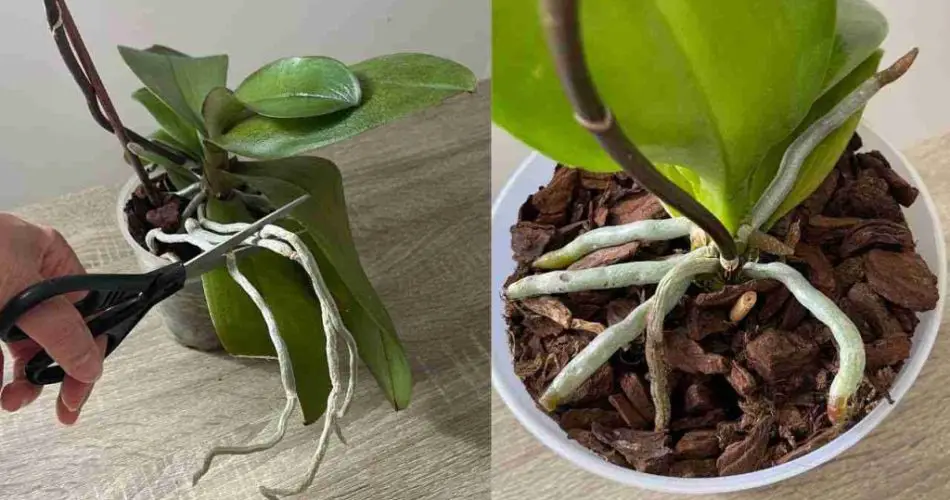
Did you know that you can encourage abundant flowers and healthy roots from your orchid by simply following a monthly procedure? If you’re looking for a way to help your orchid thrive and produce more blooms, here’s a simple trick to implement into your care routine.
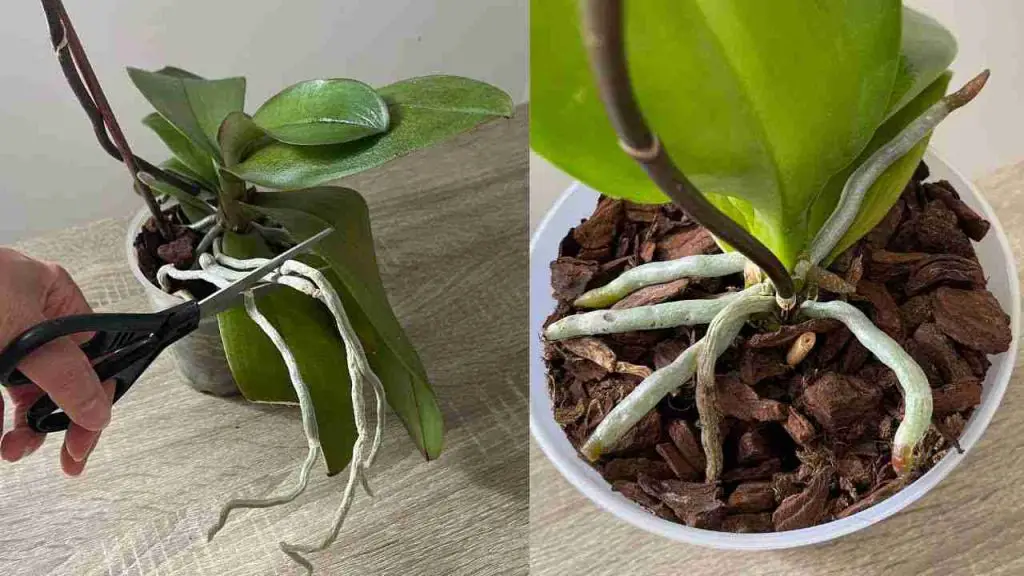
Understanding Orchid Aerial Roots
Orchids are unique plants that can produce aerial roots, a natural process that plays an important role in their growth. These aerial roots are an extension of the plant’s root system, helping the orchid absorb water and nutrients from the air, as well as providing extra support to keep the plant upright. Though they may look unusual, these roots are vital to the orchid’s survival.
Orchids typically produce aerial roots when the environment is not conducive to root growth in the potting soil. This happens because orchids instinctively seek alternative sources of water and nutrients. If you see your orchid’s roots growing outside the pot, don’t panic—it’s a sign that your plant is healthy and adapting well to its surroundings.
How to Care for Aerial Roots

To encourage the growth of your orchid’s aerial roots, follow these simple steps:
- Water the roots regularly: Aerial roots thrive with adequate moisture. You can gently water them to promote growth.
- Elevate the pot: Place the orchid’s pot in a larger container to raise it and prevent the aerial roots from touching the ground.
- Use a plastic cup: Insert the aerial roots into a cup filled with water. Keep the cup topped up as the roots absorb the water, ensuring they get the nutrients they need.
- Avoid cutting the roots: Aerial roots should never be cut, unless they are dry or dead. Cutting them can harm the plant, as these roots are a sign of the orchid’s good health.
Spraying water over the aerial roots is also a good practice, as it helps keep the plant hydrated and encourages further growth.
When to Repot Orchid Aerial Roots
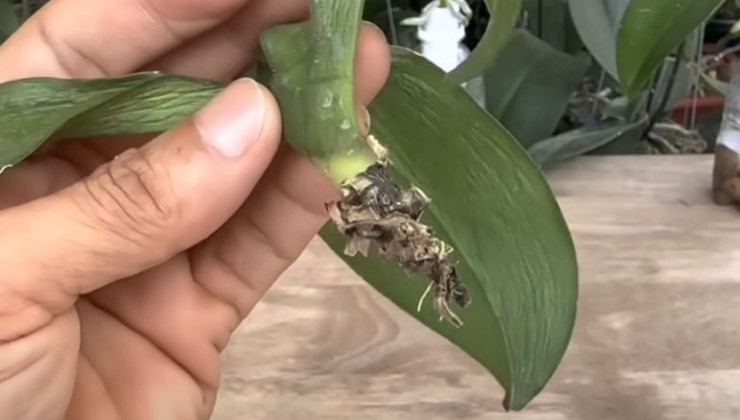
If you prefer not to have visible aerial roots, you can repot your orchid. However, there’s no need to cut them off. Here’s how to repot your orchid without damaging the aerial roots:
- Wait for the right time: Timing is crucial for repotting.
- Spray water on the aerial roots: Two weeks before repotting, begin spraying water on the aerial roots. Start with two sprays a day, then gradually increase to 4-5 times a day.
- Avoid wetting the stem and leaves: Focus on the aerial roots to acclimate them to a more humid environment.
- Repot carefully: When you’re ready to repot, gently place the roots in the new substrate, ensuring they have a smooth transition.
By gradually increasing the moisture, the roots will adjust and establish themselves well in the new soil.
Creating New Orchids from Aerial Roots
Another benefit of aerial roots is that you can propagate new orchids. If you have a healthy set of aerial roots, you can create a new orchid from them. Here’s how:
- Cut the aerial roots: Use sharp scissors to carefully cut the roots from the stem.
- Disinfect the cut: Apply cinnamon powder to the cut area to disinfect it and prevent infections.
- Plant in a new pot: Place the roots in a separate pot with clay balls and soil. Let the roots sit in oxygenated water for half an hour to soften them.
- Nourish with moss: Add pine and moss on top to nourish the plant as it establishes itself.
This procedure will encourage the roots to grow into a new orchid, and with proper care, it will eventually bloom and produce abundant flowers.
In Conclusion
Aerial roots are a natural and essential part of orchid care. They provide your plant with the extra nourishment it needs to grow and thrive. By following this simple procedure once a month—watering the roots, repotting carefully, and even propagating new orchids—you can ensure that your plant continues to grow lush, healthy, and filled with beautiful flowers. Take care of your orchid’s aerial roots, and you’ll enjoy a stunning display of vibrant blooms for years to come!