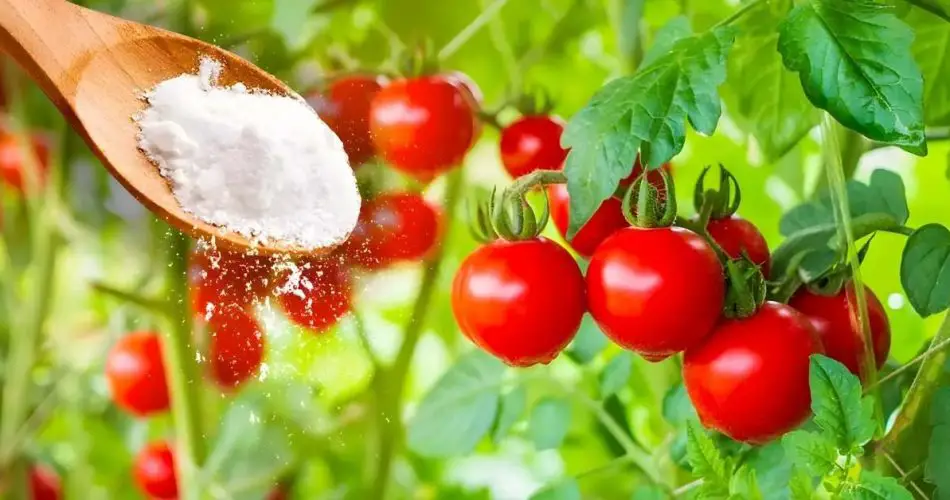
Are you a big fan of baking soda? This “miracle” powder is a must-have in every home! Versatile and multifunctional, it shines in the kitchen for baking, in household chores, and even in cosmetics for skin and hair care. But what many people don’t know is that baking soda works wonders in the garden as well. Here’s why you should keep it on hand to enhance your tomato crops.
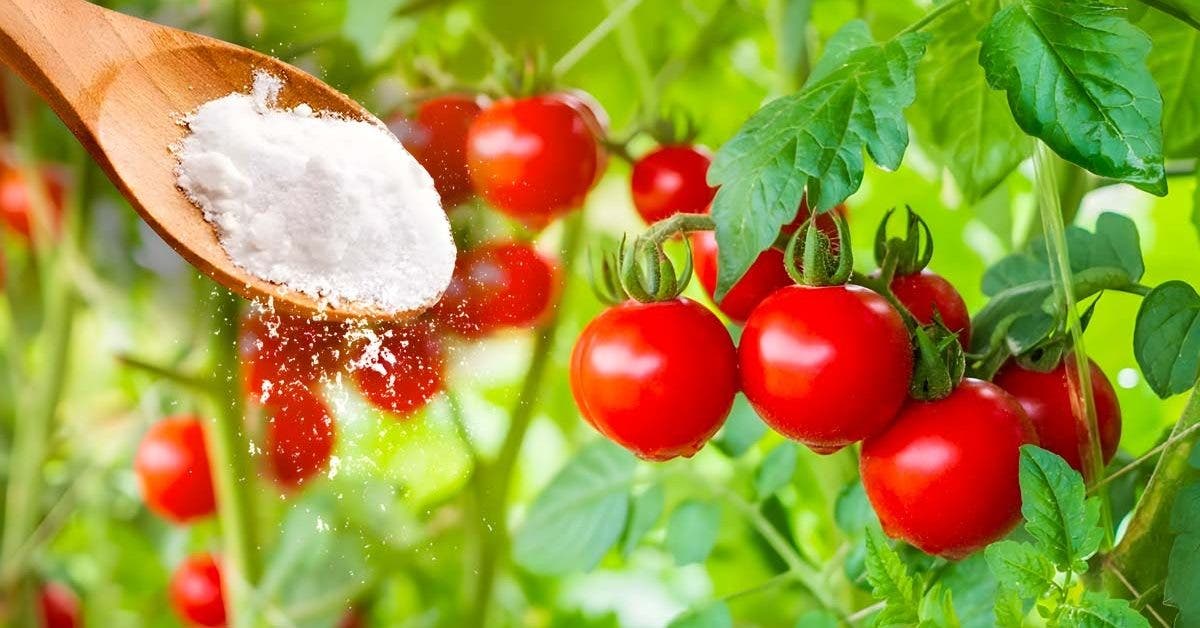
The Benefits of Baking Soda for Tomato Plants
If you grow fruits and vegetables, using baking soda can greatly improve your harvest. This economical and eco-friendly ingredient is perfect for keeping your tomatoes healthy and prolonging their freshness, making it an excellent alternative to chemical substances available in stores.
Why Is Baking Soda Beneficial for Growing Tomatoes?
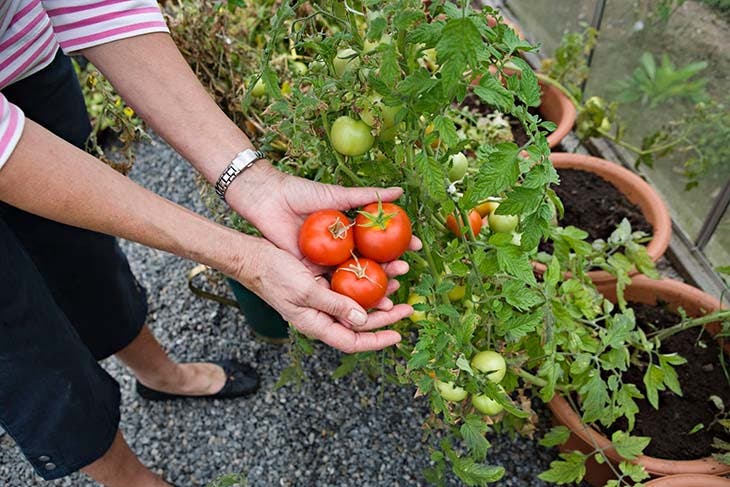
Sprinkling baking soda on your garden tomatoes helps combat leaf diseases. When mixed with water, it creates a solution that you can apply throughout the growing season, especially during rainy periods in summer.
This solution effectively prevents and combats common tomato diseases, such as mildew or powdery mildew, which can be devastating for crops. Major diseases affecting tomatoes often stem from bacteria, viruses, and fungi, leading to severe internal damage, particularly during rainy weather. Powdery mildew is identifiable by yellow spots on leaves and a fine white powder that signals mold formation on plants.
Note: If you don’t have baking soda, you can substitute it with a solution of baking powder mixed with water.
How to Use Baking Soda for a Successful Tomato Harvest
To maximize the benefits of baking soda, consider adding milk or vegetable oil to your mixture for enhanced protection. Here are two effective recipes:
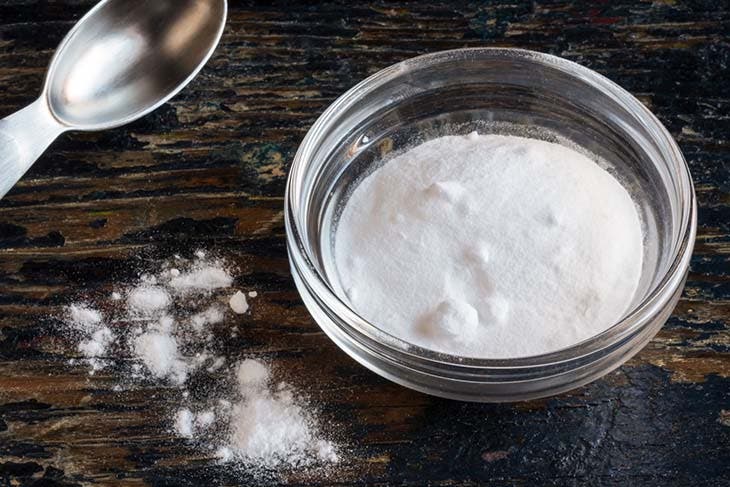
1. Baking Soda and Milk
- Ingredients:
- 1 teaspoon of baking soda
- 250 ml of water
- 250 ml of milk
- Instructions: Mix all ingredients well and apply to your plants.
2. Baking Soda and Water
- Ingredients:
- 8 teaspoons of baking soda
- 7 liters of water
- 6 tablespoons of vegetable oil
- Instructions: Thoroughly mix all ingredients to achieve a smooth consistency before application.
How to Dust Tomato Crops with Baking Soda
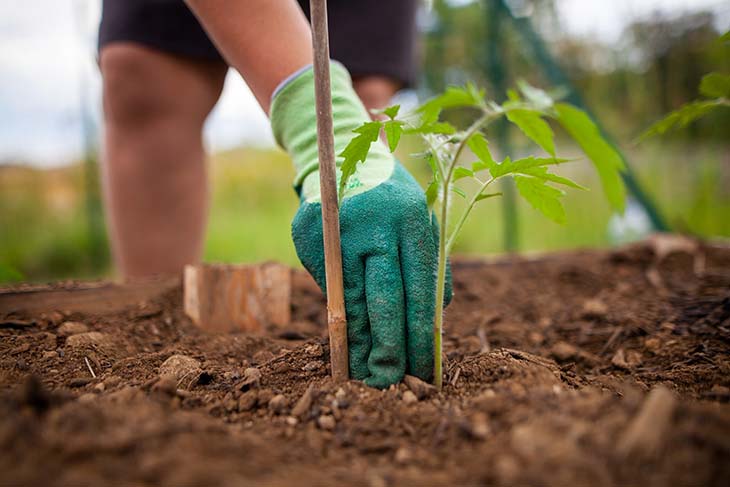
Pour the mixture into a spray bottle and apply it to the leaves of the tomatoes, focusing on those affected by powdery mildew. Be sure to also spray the underside of the leaves. It’s crucial to defoliate the plants first by removing all leaves affected by disease. After treatment, the foliage will gradually recover.
Caution
Exercise caution when using these treatments, as they can be potent and may damage crops. It’s advisable to test the solution on one or two leaves before applying it to all plants.
By incorporating baking soda into your gardening routine, you can boost your tomato crop naturally and effectively!