Maintaining your garden is more challenging than it may seem. It requires time, patience, and the right care to preserve your plants. Changes in temperature can significantly impact your garden: flowers, trees, and shrubs need regular watering to prevent drying out. The lawn also needs hydration, yet many neglect this crucial task. Here’s a simple tip to help you take better care of your lawn.

The Importance of Hydration for Your Lawn

What could be sadder than a dry and yellowed lawn? If you don’t provide the necessary care and water, your once lush green grass will fade, dry out, and eventually die. So, how often should you water it, and why should you stick a screwdriver in the ground? Let’s explore.
Is Your Lawn Dry? Hydration is Essential!

To maintain a healthy lawn, you must meet its primary needs, with watering being one of the most critical. If your lawn has turned yellow and dry after those long, hot summer days, it’s time for some careful maintenance.
- Mow Properly: Start by mowing your lawn at the right height. Rake to remove dead stems and the top layer they create. Dry grass can block water from reaching the roots, leading to rotting and fungal diseases. Scarifying your lawn is essential: it helps air and water penetrate the soil more effectively, cleaning away dead matter.
- Water Thoroughly: After mowing, water the grass deeply until the water reaches the deeper layers of the soil. Then, reduce the frequency of watering, especially in winter when rainfall is more common. Regular mowing promotes greener growth, so don’t forget to remove weeds as soon as they appear.
After three to four weeks, you should see new growth. Remember, avoid fertilizing in summer; save that for around September. A dry lawn is more susceptible to weeds, so regularly check for and remove them starting in spring.
Test Your Lawn’s Condition with a Screwdriver

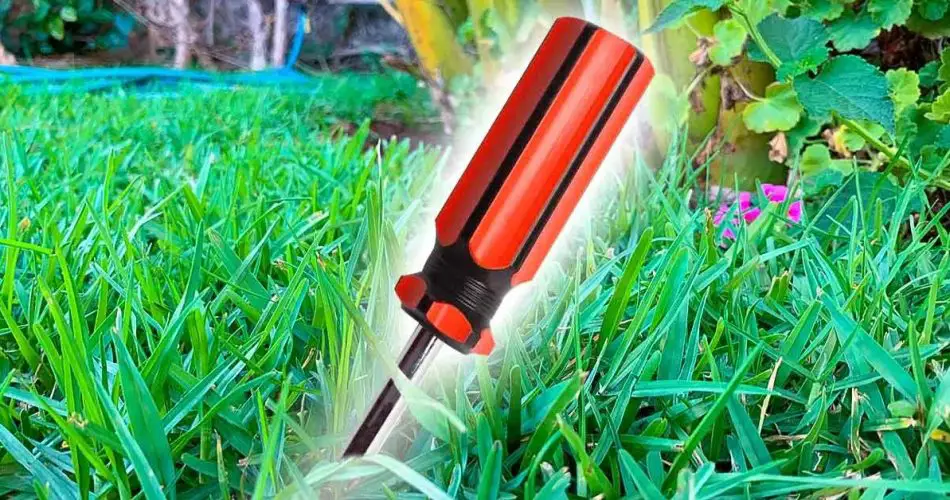
Now, let’s talk about our handy tip: a preventive measure to ensure your lawn stays healthy. It’s essential to regularly check if your grass is sufficiently hydrated and well-aerated. Laurent Guervenec, a gardening expert, suggests using a simple tool: an ordinary screwdriver.
How to Conduct the “Screwdriver Test”
- Push the screwdriver into the soil by hand.
- If it slides in easily to a depth of 15 to 17 centimeters, your lawn is well-watered and hydrated.
- If you encounter resistance or blockage, the soil is likely too hard and compacted, indicating a lack of aeration and moisture. In this case, you need to increase your watering efforts.
By incorporating this simple test into your lawn care routine, you can ensure a lush, green lawn all season long!