Here are some useful tips for successfully sowing organic seeds.
- Use a good substrate
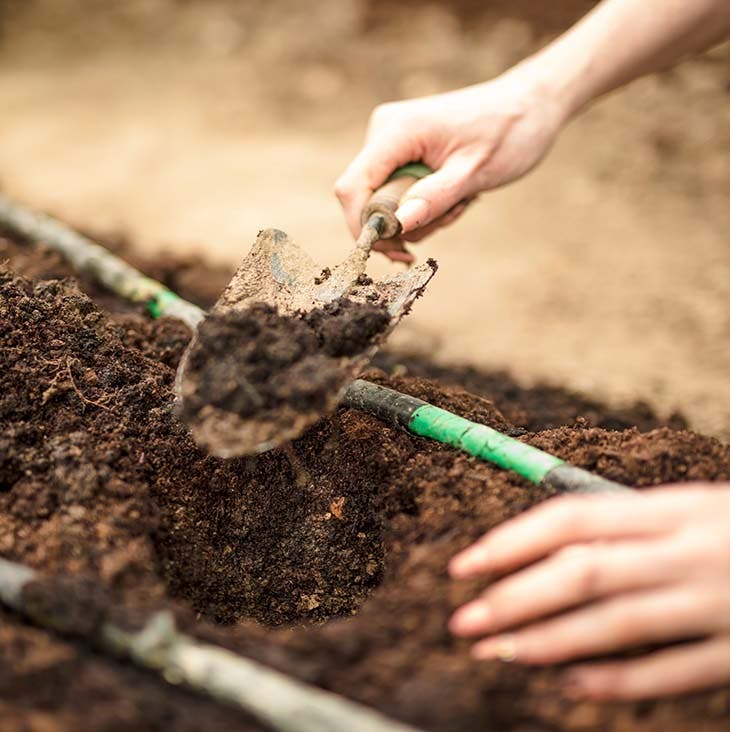
Seeds contain their own nutrients, so they do not need enriched potting soil to germinate. However, the growing soil must be light soil, ideal for sowing and transplanting.
Be careful, garden soil is not suitable for seedlings, as it often contains weeds, parasites and too many nutrients (which would burn the very fine seedling roots).
Your substrate must be permeable and loose. A mixture of potting soil and sand is ideal, or a mixture of finely ground leaves (40%) with seedling soil (40%). Add horse manure (20%) composted for a few weeks and watered regularly. When it falls apart, it’s ready! Also add a few pinches of algae powder to stimulate germination.
- Choose the exact depth
Incorrect seeding depth is the main cause of seeding failure. Be careful not to sow too deep: generally 1 to 2 times the thickness of the seed, no advantage. Cover the seeds with a thin layer of potting soil and tamp down.
Many seeds like to be covered by their size’s depth of soil, but some seeds need light to germinate (thus be placed on the soil).
Seeds contain food reserves that are used for energy and growth until the plant is able to produce its own food through photosynthesis. If sown too deeply, the developing plant may exhaust its food reserve before reaching the surface. A lack of oxygen can also affect the developing plant.
- Respect the spacing
Observe a spacing between the rows depending on the species and sow lightly.
- Bring light
Air and light are essential for the good start of young plants. If your seedlings stretch and soften, this is a sign of a lack of light. Place your plants near the window, ideally not far from a heater to facilitate emergence. As seedlings tend to lean toward the light source, rotate the seed tray a quarter turn every three or four days, so they will be exposed to sunlight on all sides and grow straighter.
- Sufficient water
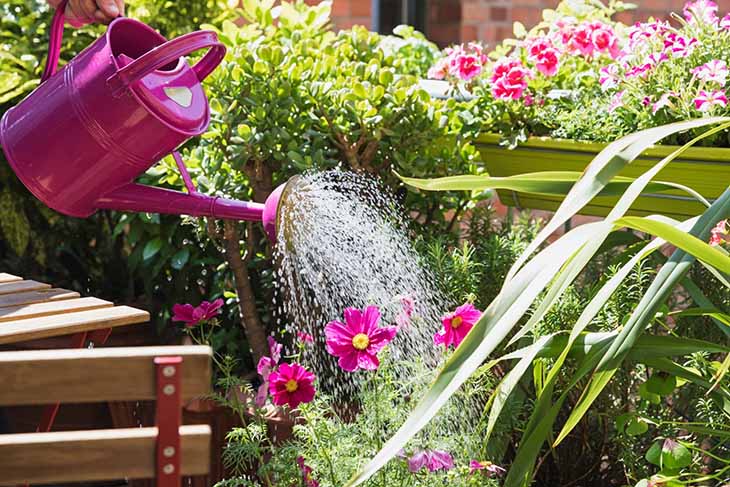
Water daily with a fine sprinkler so as not to disturb the seeds.
Watering can be done by soaking the seedling terrine 2/3 in water, for around ten minutes. The pots with holes in the bottom are placed on trays filled with water and the water rises by capillary action to the seedlings. Don’t forget to drain excess water.
- And a little warmth
The optimal temperature for germination varies depending on plant species. If seeds are planted too early, cold, wet conditions can cause poor germination and fungal diseases which will lead to a weak forage stand. If planted too late in the season, high temperatures, lack of moisture, and competition from weeds and other plants can reduce seedling success. Keep in mind that soil temperatures are generally lower than air temperatures.
Did you know ?
A seed must absorb approximately its own body weight in water to begin to germinate.
Not all plants tolerate transplantation. Thus, root vegetables (carrots, turnips, beets, radishes, etc.) do not transplant or are difficult to transplant.
To avoid sowing too thickly, you can mix your small seeds with fine sand or ash.
To strengthen your young plants before planting them in the ground, dilute plant manure (special for seedlings or nettle for example) with the watering water. Spray your small seedlings every 10 days.
Why sow rather than plant?
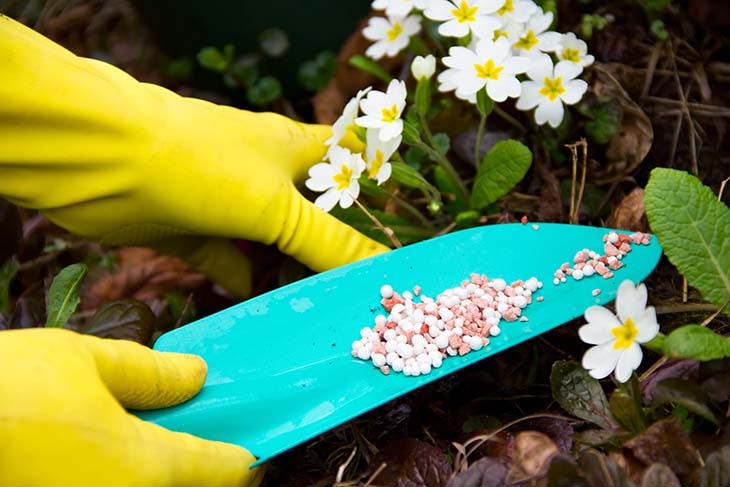
Sowing allows you to discover a wide variety of seeds (the choice is much wider).
If you’re a little patient, one packet of seeds provides a large quantity of plants for the price of a single plant already grown.
By sowing you will be able to densify your crops: only the most beautiful plants are transplanted and the non-germinated cells are discarded.
After sowing, eliminate the weak plants from these seeds: this is called thinning. Leave more room for the remaining plants!
You should always sow more seeds than you will ultimately have plants.
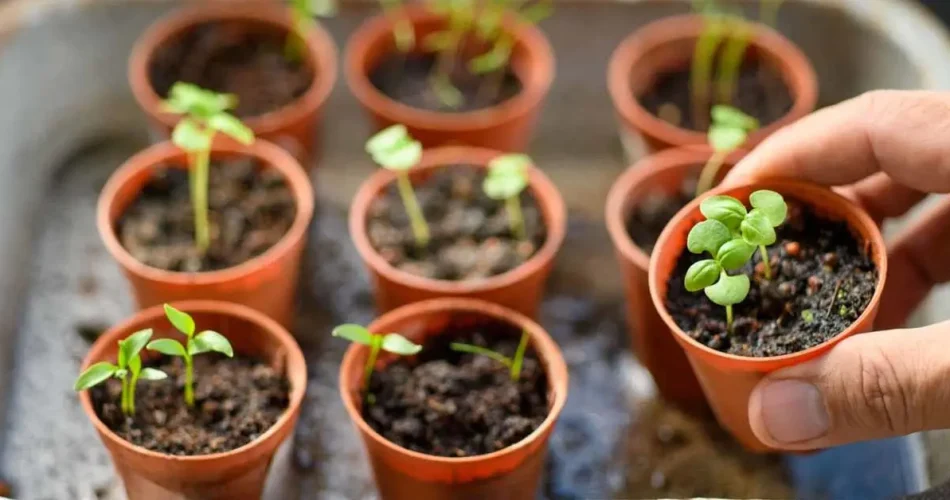
You must prepare the soil, distribute the seeds, water regularly, ensure that the seedlings are not exposed to drafts or cold.