The Rosary Plant, with its unique appearance and sweet aroma, requires specific care to thrive.
Here’s a guide on how to care for your Rosary Plant:

Substrate:
Use sandy soil with good drainage for your Rosary Plant. If your soil is clayey, mix three parts substrate with one part sand to create a loose, sandy mixture that allows water to escape easily.
Light:
Place your Rosary Plant in a well-lit area away from direct sunlight, as direct exposure can cause its leaves to burn. Optimal temperatures for growth range between 13º and 26º Celsius. Ensure it’s protected from cold drafts, especially when temperatures drop below 7º Celsius.
Irrigation:
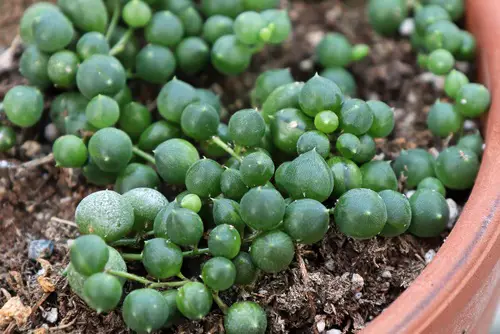
Avoid overwatering your Rosary Plant, as succulents store water in their leaves and don’t require frequent watering. In hot weather, water once a week, reducing frequency to once a month during colder periods. Watch for flattened spheres, which indicate a need for water.
Fertilization:
Provide nutrients to your Rosary Plant by adding worm castings to the substrate twice a year. Additionally, use liquid fertilizer in spring and summer, choosing a formula rich in phosphorus and potassium but low in nitrogen. Avoid nitrogen-rich fertilizers, as they can harm succulents.

Transplant:
Transplant your Rosary Plant every two to three years to prevent it from becoming cramped in its pot. During transplantation, add gravel or tile pieces at the bottom of the pot to improve drainage and prevent root rot.
Pruning:
Prune your Rosary Plant annually to maintain its shape and abundance. Remove dry stems to redirect the plant’s energy to healthier parts. Use disinfected scissors to prevent the spread of pests or diseases to other plants.
By following these care tips, you can ensure that your Rosary Plant thrives and continues to adorn your home with its unique beauty and sweet aroma.