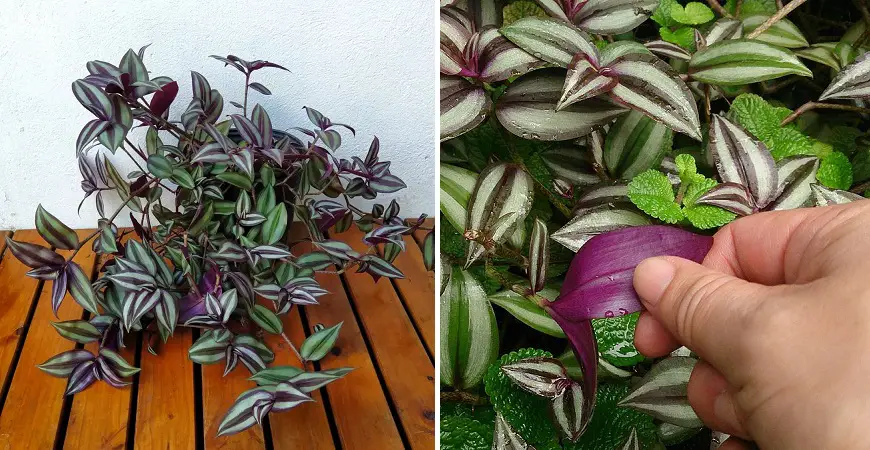
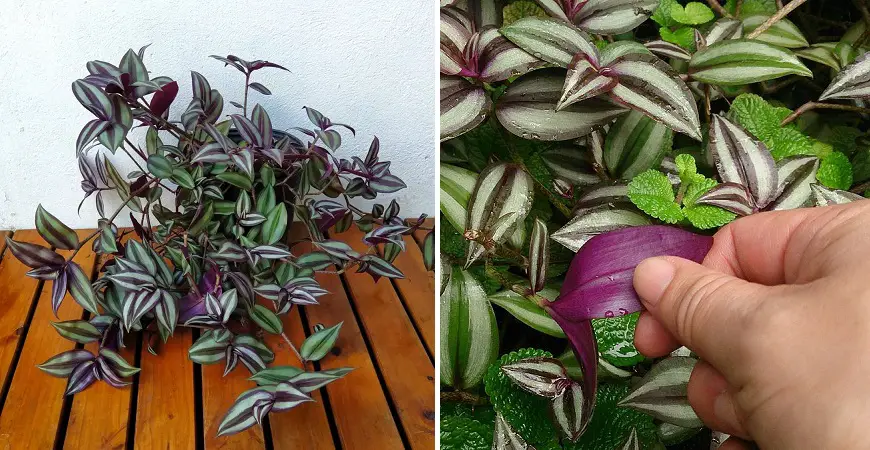
The Zebrina, often referred to as the Wandering Jew or Tradescantia zebrina, is a stunning succulent with striking foliage. Its lush, oval, and pointed leaves are typically adorned with a mix of green, silver, and purple stripes, making it a popular choice for home decoration. Though it’s less likely to flower indoors, it’s a resilient plant that can enhance any space, whether it’s a balcony, garden, or hanging pot.
Here’s a comprehensive guide to caring for, propagating, and cultivating your Zebrina.
1. How to Care for a Zebrina

General Care:
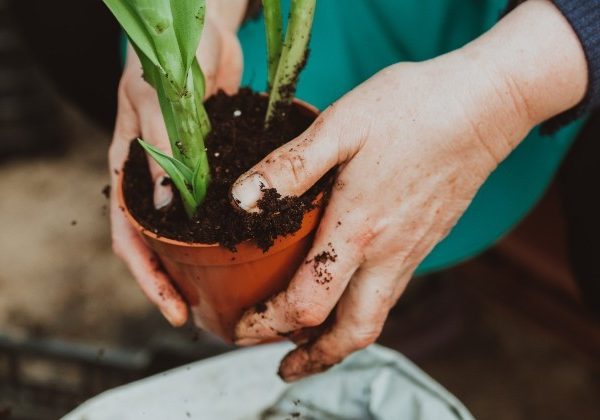
- Growth: Zebrina is a vigorous grower. You may notice its roots emerging from the bottom of the pot. When this happens, it’s time to repot it into a larger container with good drainage.
- Pruning: If the plant becomes leggy or its color fades, it’s time to prune. Zebrina can be pruned any time of the year to encourage bushier growth.
- Watering: Water regularly, but allow the soil to dry out between waterings. Overwatering can lead to root rot.
- Fertilization: Add a few drops of fertilizer to the watering can every 15-20 days during the growing season.
Temperature and Light:
- Temperature Tolerance: Zebrina tolerates cooler temperatures but thrives best in warmer conditions. Keep it away from frost.
- Light: Avoid direct sunlight. Place it in bright, indirect light. During propagation, ensure semi-shade conditions.
Potting and Soil:
- Repotting: Repot when roots appear at the bottom of the pot. Use a pot with good drainage and refresh the top 2.5 cm of compost as needed.
- Soil: A well-draining mix is crucial. Use a blend of sand and compost.
2. How to Propagate a Zebrina

Propagation Steps:
- Timing: Propagate in spring for optimal growth.
- Cuttings: Cut a stem of about 8 cm below a node. Remove leaves from the bottom 2.5 cm.
- Planting: Place the cuttings in a pot with equal parts sand and compost. Ensure the compost is moist before inserting the stems.
- Location: Keep the pot in a semi-shaded area. New roots will appear within a week.
- Transplanting: Once new leaves develop, transplant the cuttings into a new pot, spacing them at least 5 cm apart.
3. Cultivation Tips

- Watering: Water when the soil surface is dry. Ensure excess water drains from the pot, and discard any water that collects in the saucer.
- Humidity: Zebrina prefers humid environments. Place it near a bathroom or kitchen if possible, or mist it regularly.
- Fertilization: Fertilize during the hot months to support growth.
Light and Position:
- Light: Avoid direct sunlight. Bright, indirect light helps maintain vibrant leaf colors.
- Position: Ideal locations include bright rooms with indirect light or semi-shaded spots.
4. Tips to Keep in Mind

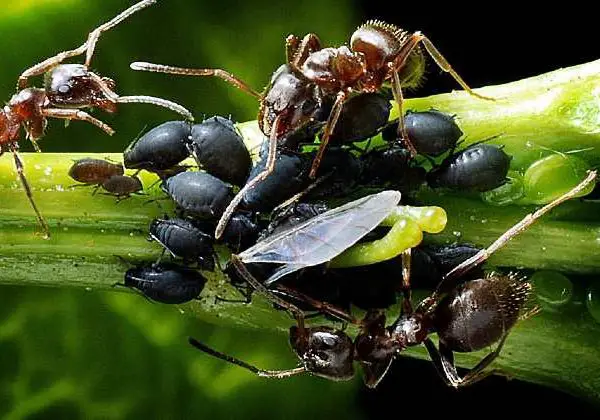
- Pests: Zebrina is generally resistant to pests but can attract red spiders. Maintain humidity to deter mites.
- Leaf Color:
- Fading Color: Often indicates insufficient light.
- Yellowing Leaves: Typically a sign of overwatering.
- Curling Leaves: Usually caused by too much light.
With the right care, your Zebrina can thrive, adding beauty and a touch of greenery to your home. Enjoy the process of nurturing this lovely plant and watching it grow!