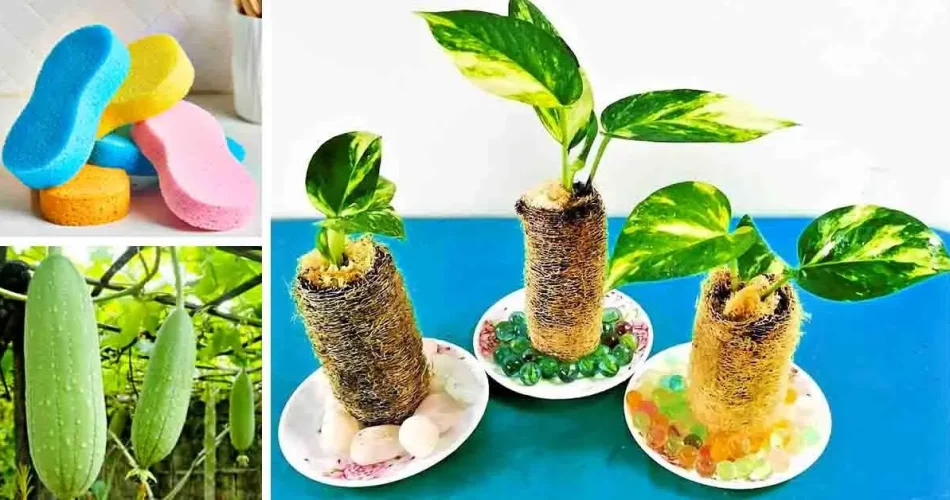
Using old sponges to grow plants is a clever gardening hack that doesn’t require much space or expertise.
Here’s how you can utilize this method to start your own mini garden:
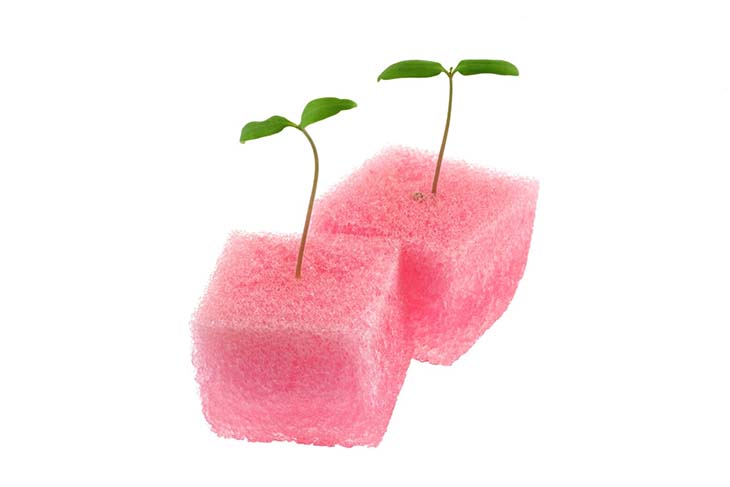
Materials Needed:
- Old sponges (preferably untreated with detergents or antibacterial compounds)
- Shallow container
- Seeds of your choice
- Plastic wrap
- Water spray bottle
- Scissors
Instructions:
- Prepare the Sponges: Ensure your old sponges are clean and free from any detergents or antibacterial residues. You can rinse them with water or clean them with a few drops of bleach, then rinse thoroughly.
- Soak the Sponges: Place the sponges in a shallow container and soak them with water. Ensure they are thoroughly saturated but not waterlogged.
- Sow the Seeds: Once the sponges are soaked, you can sow the seeds directly onto the surface. You can either sow multiple seeds across the sponge or create a hole in the center to plant a single seed. Make sure the seeds are pressed gently into the sponge to ensure good contact.
- Cover and Monitor: Cover the container with plastic wrap to create a greenhouse-like environment for the seeds. This helps retain moisture and create a favorable environment for germination. Place the container in a sunny spot to provide adequate light for the seeds to grow.
- Maintain Moisture: Check the sponges regularly to ensure they remain moist. If they start to dry out, mist them with water using a spray bottle. Avoid overwatering, as this can lead to mold growth.
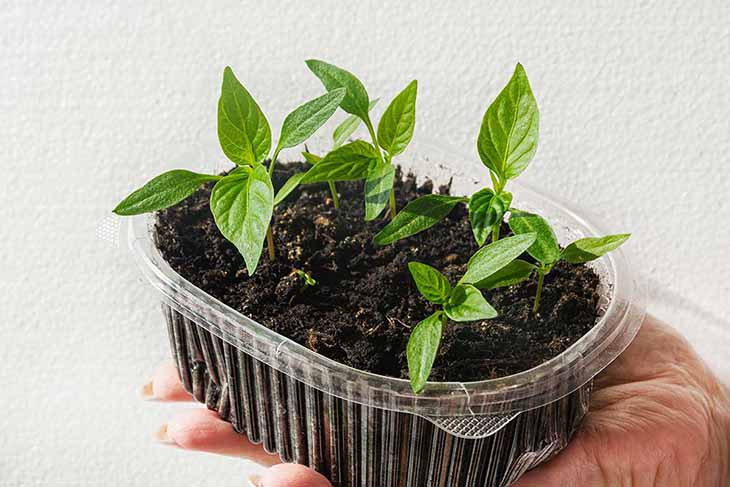
- Transplanting: Once the seeds have germinated and developed roots, you can transplant them into pots or directly into your garden. Use scissors to cut the sponge around the seedlings, ensuring the roots remain intact.
- Harvesting: Wait until the seedlings have grown to a suitable size before transplanting or harvesting. Monitor their growth and ensure they have enough space to develop fully.
Plants Suitable for Growing on Sponges:
- Perennial plants such as onions, garlic, and leeks.
- Vegetables with small seeds like broccoli or mustard.
- Aromatic herbs like basil, parsley, or cilantro.
Additional Gardening Tip with Sponges:
You can also use old sponges to improve watering efficiency in potted plants. Cut a sponge to fit the bottom of the pot, add soil on top, and sow the seeds. The sponge will help absorb excess water, preventing waterlogging and promoting healthy plant growth.
By utilizing old sponges in your gardening endeavors, you can effectively grow plants in a small space and explore your green thumb skills with ease. Whether you’re starting seeds or improving watering efficiency, sponges can be a versatile tool in your gardening arsenal.
Show Comments